
Quick Overview
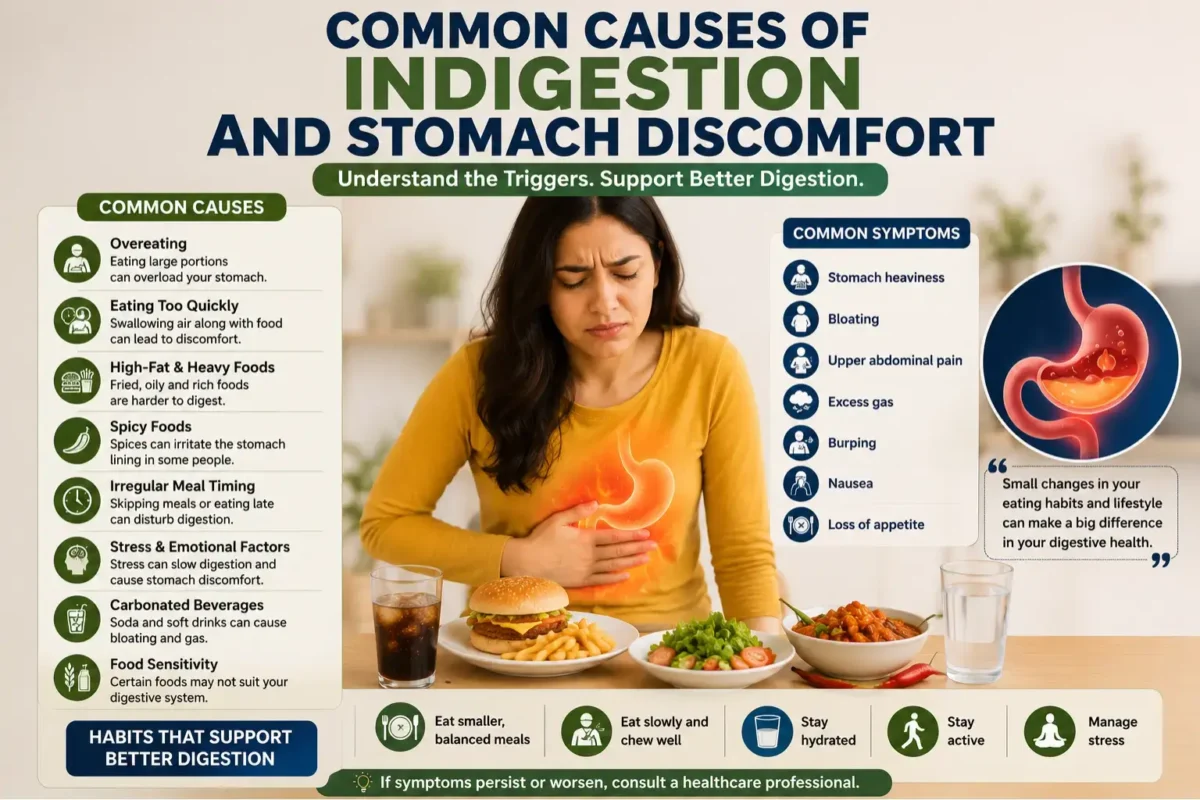
Indigestion and stomach discomfort are common digestive problems that many people experience from time to time. Common causes of indigestion and stomach discomfort appear after eating certain foods, overeating, eating too fast, or following unhealthy daily habits. Some people may notice heaviness in the stomach, bloating, burping, or a burning feeling after meals.
Occasional digestive discomfort is usually manageable through better eating habits and lifestyle changes. However, frequent or severe symptoms should always be discussed with a qualified healthcare professional.
This article is part of our Complete Guide to Digestive Health.
Read the Complete Guide to Digestive Health
What Is Indigestion?
Indigestion, also called dyspepsia, refers to discomfort felt in the upper stomach area, especially during or after eating. It is not considered a disease itself. Instead, it describes a group of digestive symptoms that can happen due to different food choices and lifestyle factors.
Many people experience indigestion after consuming large meals, oily foods, or meals that do not suit their digestion.
Common Causes of Indigestion
Symptoms can differ from person to person.
Some commonly reported signs include:
- Feeling unusually full after eating
- Heaviness in the stomach
- Upper abdominal discomfort
- Bloating
- Excess gas
- Frequent burping
- Mild nausea
- Burning feeling in the upper stomach
- Reduced appetite
Some individuals may experience only one symptom, while others may notice several symptoms together.
Common Causes of Indigestion and Stomach Discomfort
Eating Too Much
Overeating can put extra pressure on the digestive system. Large meals often make digestion feel slower and heavier.
Helpful habits include:
Eating moderate portions
Avoiding overeating
Chewing food properly
Eating Too Fast
When food is eaten quickly, extra air may enter the stomach during swallowing. Fast eating also gives the digestive system less time to process food comfortably.
Eating slowly and chewing properly may help improve digestive comfort.
Oily and Heavy Foods
Fried and greasy foods can sometimes lead to stomach discomfort and heaviness.
Examples include:
- Deep-fried snacks
- Fast food items
- Rich gravies
- Highly processed meals
Not everyone reacts the same way, as food tolerance varies between individuals.
Spicy Meals
Very spicy foods may trigger digestive uneasiness in some people.
Possible effects may include:
- Burning sensation
- Upper stomach discomfort
- Temporary digestive irritation
Some people tolerate spicy foods well, while others may feel discomfort soon after eating them.
Irregular Eating Schedule
Skipping meals or eating at inconsistent times can sometimes disturb normal digestion. Very late dinners may also contribute to discomfort in certain individuals.
Maintaining a regular eating routine may support better digestive balance.
Stress and Emotional Pressure
Stress does not affect only the mind. It can also influence digestion.
During stressful periods, some people may notice:
- Stomach uneasiness
- Loss of appetite
- Bloating
- General digestive discomfort
Managing stress through healthy daily habits may help support overall wellness.
Carbonated Drinks
Soft drinks and fizzy beverages contain gas, which may increase bloating and feelings of fullness.
Choosing water more often may help maintain better hydration and digestive comfort.
Sensitivity to Certain Foods
Some people notice digestive discomfort after eating specific foods.
Common examples include:
- Dairy products
- Highly processed foods
- Very fatty meals
- Artificial sweeteners
Keeping track of meals and symptoms may help identify food-related patterns.
Differences Between Indigestion, Gas and Acidity
Condition Main Symptom Common Area Burping Burning Sensation
Indigestion Stomach discomfort Upper abdomen Sometimes Possible
Gas Bloating and pressure Abdomen Common Rare
Acidity Burning feeling Chest or upper stomach Sometimes Common
These conditions may share some similar symptoms, which often causes confusion between them
Daily Habits That May Support Better Digestion
Eat Slowly
Taking time during meals and chewing properly may support smoother digestion.
Drink Enough Water
Proper hydration helps support normal digestive function.
Follow Regular Meal Timings
Eating meals at consistent times may help maintain digestive comfort.
Stay Active
Light physical activity and regular movement support overall digestive wellness.
Manage Stress
Adequate rest, relaxation, and healthy routines may positively influence digestion and general well-being.
When Should You Consult a Doctor?
Seek medical advice if symptoms
- Happen frequently
- Continue for several weeks
- Affect daily routine
- Include unexplained weight loss
- Cause difficulty swallowing
- Lead to severe stomach pain
- Are associated with ongoing nausea or vomiting
A healthcare professional can properly evaluate the symptoms and identify the possible cause.
Frequently Asked Questions
Q1. Is indigestion the same as gas?
No. Indigestion refers to digestive discomfort, while gas involves trapped air or gas inside the digestive tract.
Q2. Can overeating lead to indigestion?
Yes. Eating large portions may cause heaviness, fullness, and digestive discomfort.
Q3. Why do I feel uncomfortable after meals?
Several factors may contribute, including food choices, meal size, eating habits, and individual digestive sensitivity.
Q4. Can stress affect digestion?
Yes. Stress may influence the digestive system and contribute to stomach discomfort in some people.
Q5. Does drinking water support digestion?
Adequate water intake helps support normal digestive processes and overall digestive wellness.
Final Thoughts
Indigestion and stomach discomfort can develop due to multiple dietary and lifestyle factors such as overeating, fast eating, stress, irregular meal timings, and certain food choices. Understanding these common triggers may help people make better daily habits that support digestive comfort and overall wellness.
Explore our Digestive care Products
Related Topics:
Complete Guide to Digestive Health
What Causes Gas and Bloating After Meals?