
Quick Answer
Why do some foods cause bloating?
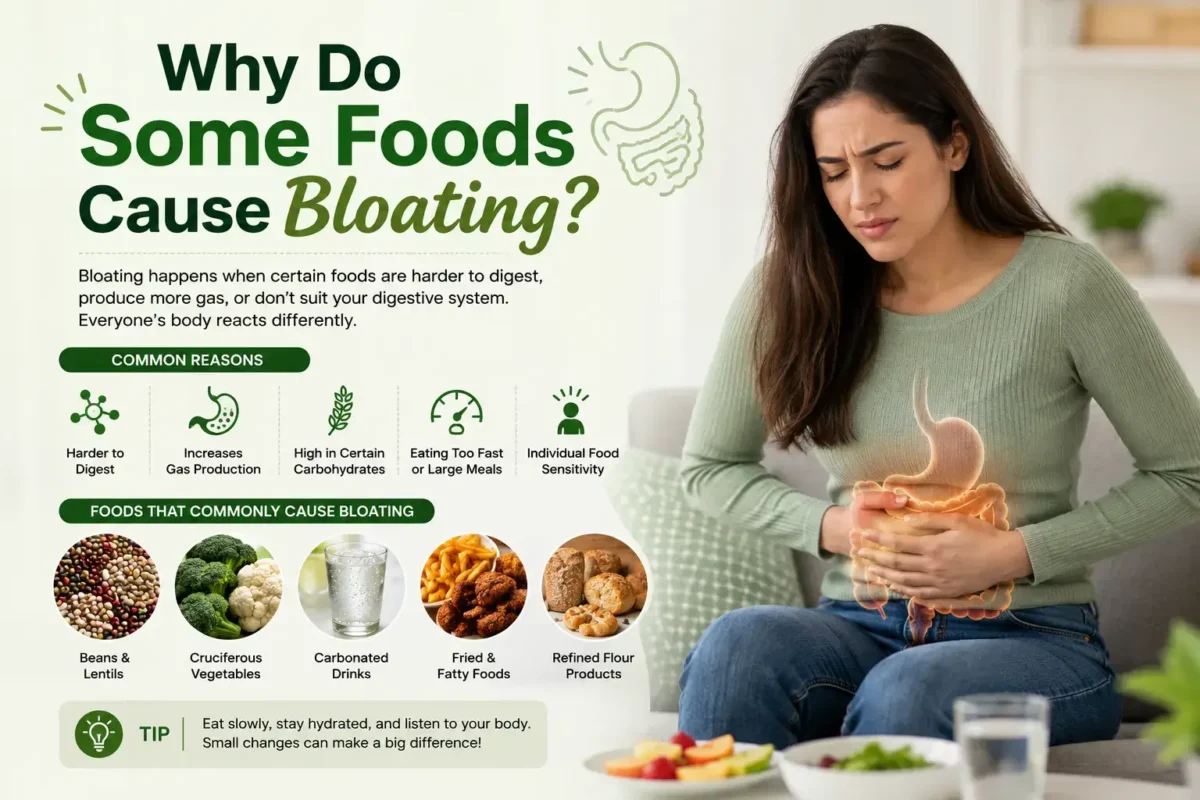
Bloating can occur when certain foods are digested differently, contain specific types of carbohydrates, lead to increased gas production, or simply do not suit an individual’s digestive system. While one person may eat a particular food without any issues, another may experience fullness, abdominal pressure, or bloating afterward. Individual digestive responses can vary significantly.
This article is part of our Complete Guide to Digestive Health.
Read the Complete Guide to Digestive Health
What Is Bloating?
Bloating is a feeling of fullness, tightness, or pressure in the abdomen.
People often describe bloating as:
- A swollen or stretched stomach
- Feeling unusually full after eating
- Tight clothing around the waist
- Increased burping or gas
- Abdominal discomfort
Bloating can happen occasionally and may be influenced by food choices, eating habits, and lifestyle factors.
Why Do Some Foods Cause Bloating?
Not all foods affect everyone in the same way.
Several factors may explain why certain foods are more likely to cause bloating in some individuals.
1. Some Foods Naturally Produce More Gas During Digestion
As food moves through the digestive system, some components are broken down differently than others.
Certain foods may lead to increased gas production during digestion, which can contribute to feelings of fullness or abdominal pressure.
This does not necessarily mean the food is unhealthy. It simply means that digestion may vary from person to person.
2. High-Fiber Foods Can Affect People Differently
Fiber is an important part of a balanced diet.
However, when people suddenly increase their fiber intake, they may notice:
- Temporary bloating
- Increased gas
- Changes in digestive comfort
Examples include:
- Beans
- Lentils
- Whole grains
- Certain vegetables
Gradual dietary changes are often easier for the digestive system to adapt to.
3. Eating Large Portions
Sometimes the issue is not the food itself but the amount consumed.
Large meals may leave some people feeling:
- Overly full
- Heavy after eating
- Bloated
- Less comfortable
Portion size can influence digestive comfort just as much as food choice.
4. Eating Too Quickly
Fast eating may contribute to bloating because people often swallow more air while eating.
This can lead to:
- Burping
- Abdominal pressure
- Temporary fullness
- Post-meal discomfort
Taking time to chew food thoroughly may help support a more comfortable eating experience.
5. Carbonated Beverages
Soft drinks and sparkling beverages contain gas.
Some people notice:
- Increased bloating
- Burping
- Fullness
after consuming carbonated drinks, especially alongside large meals.
6. Individual Food Sensitivities
Every digestive system is unique.
A food that feels comfortable for one person may not feel the same for another.
People sometimes notice bloating after consuming specific foods repeatedly.
Keeping track of meals and symptoms may help identify personal patterns.
Common Foods People Often Associate With Bloating
Digestive responses vary, but foods commonly discussed in relation to bloating include:
- Beans and lentils
- Cabbage
- Broccoli
- Cauliflower
- Carbonated drinks
- Fried foods
- Large, heavy meals
These foods do not affect everyone equally.
Habits That May Help Reduce Bloating
Eat Slowly
Taking time during meals may reduce excess air swallowing.
Watch Portion Sizes
Moderate portions often feel more comfortable than oversized meals.
Stay Hydrated
Adequate water intake is commonly included in healthy digestive habits.
Observe Personal Food Patterns
Keeping a simple food journal may help identify foods that seem linked to bloating.
Stay Active
Light daily movement is often part of a healthy lifestyle.
Frequently Asked Questions – Why Do Some Foods Cause Bloating
Q1. Why do healthy foods sometimes cause bloating?
Some healthy foods contain fiber or other components that may affect people differently during digestion.
Q2. Can eating too fast cause bloating?
Yes. Fast eating may increase air swallowing and contribute to post-meal bloating in some individuals.
Q3. Do carbonated drinks cause bloating?
Some people report increased fullness or bloating after consuming carbonated beverages.
Q4. Is bloating always related to food?
Not necessarily. Eating habits, meal size, hydration, and lifestyle factors may also influence digestive comfort.
Q5. How can I identify foods that cause bloating?
Keeping track of meals and symptoms may help reveal personal patterns over time
Conclusion
“Why do some foods cause bloating?” The answer often depends on how individual digestive systems respond to different foods, portion sizes, and eating habits. Paying attention to personal food patterns, eating slowly, staying hydrated, and maintaining balanced eating habits may help support better digestive comfort.
Explore our Digestive Care Products
Related Topic:
- Complete Guide to Digestive Health
- What Causes Gas and Bloating After Meals?
- Difference Between Gas and Acidity
- Common Causes of Indigestion and Stomach Discomfort
- Why Do I Feel Bloated After Eating
- Foods That Commonly Cause Gas and Bloating
- How Eating Habits Affect Digestion
- Can Drinking More Water Help Digestion?
- Does Walking After Meals Help Digestion?
- Best Foods That May Support Healthy Digestion