
Complete Guide to Digestive Health
Introduction
Digestive health plays an important role in overall well-being. Every day, the digestive system works continuously to break down food, absorb nutrients, and eliminate waste. When digestion functions efficiently, the body is better able to utilize the nutrients obtained from a balanced diet. Although digestive needs vary from person to person, adopting healthy eating habits and an active lifestyle may help support normal digestive function.
Table of Contents
ToggleMany people experience occasional digestive discomfort such as gas, bloating, acidity, or indigestion. In many cases, these concerns are influenced by everyday habits including meal timing, food choices, hydration, stress levels, and physical activity. Understanding how the digestive system works and learning about factors that influence digestive wellness can help individuals make informed lifestyle choices.
This comprehensive guide brings together essential information about digestive health in one place. It explains how the digestive system functions, discusses common digestive concerns, highlights healthy dietary and lifestyle practices, and provides links to more detailed articles covering specific digestive topics.
Whether you are looking to understand digestion better or want to explore practical wellness habits, this guide serves as a starting point for building long-term digestive health awareness.

What Is Digestive Health?
Digestive health refers to the normal functioning of the digestive system, which includes the organs responsible for breaking down food, absorbing nutrients, and removing waste from the body. A healthy digestive system allows food to move efficiently through the gastrointestinal tract while supporting the body’s nutritional needs.
Digestion begins even before the first bite of food reaches the stomach. The sight, smell, and taste of food stimulate the production of saliva and digestive secretions that help prepare the body for digestion. As food moves through different parts of the digestive system, it is gradually broken down into nutrients that can be absorbed and used by the body.
Digestive wellness is influenced by many factors, including:
• Balanced food choices
• Regular meal timing
• Adequate hydration
• Dietary fibre intake
• Physical activity
• Sleep quality
• Stress management
Because these factors work together, digestive health is often considered a reflection of overall lifestyle habits rather than any single food or daily routine.
Maintaining digestive wellness does not necessarily require major lifestyle changes. Small, consistent habits such as eating slowly, drinking enough water, including fiber-rich foods in meals, and staying physically active may contribute to everyday digestive comfort. Read more about early warning signs and habits here: Signs of Poor Digestive Habits and How to Improve Them
As this guide progresses, you will learn more about the digestive process, common digestive concerns, and practical ways to support digestive wellness through healthy daily habits.
How the Digestive System Works
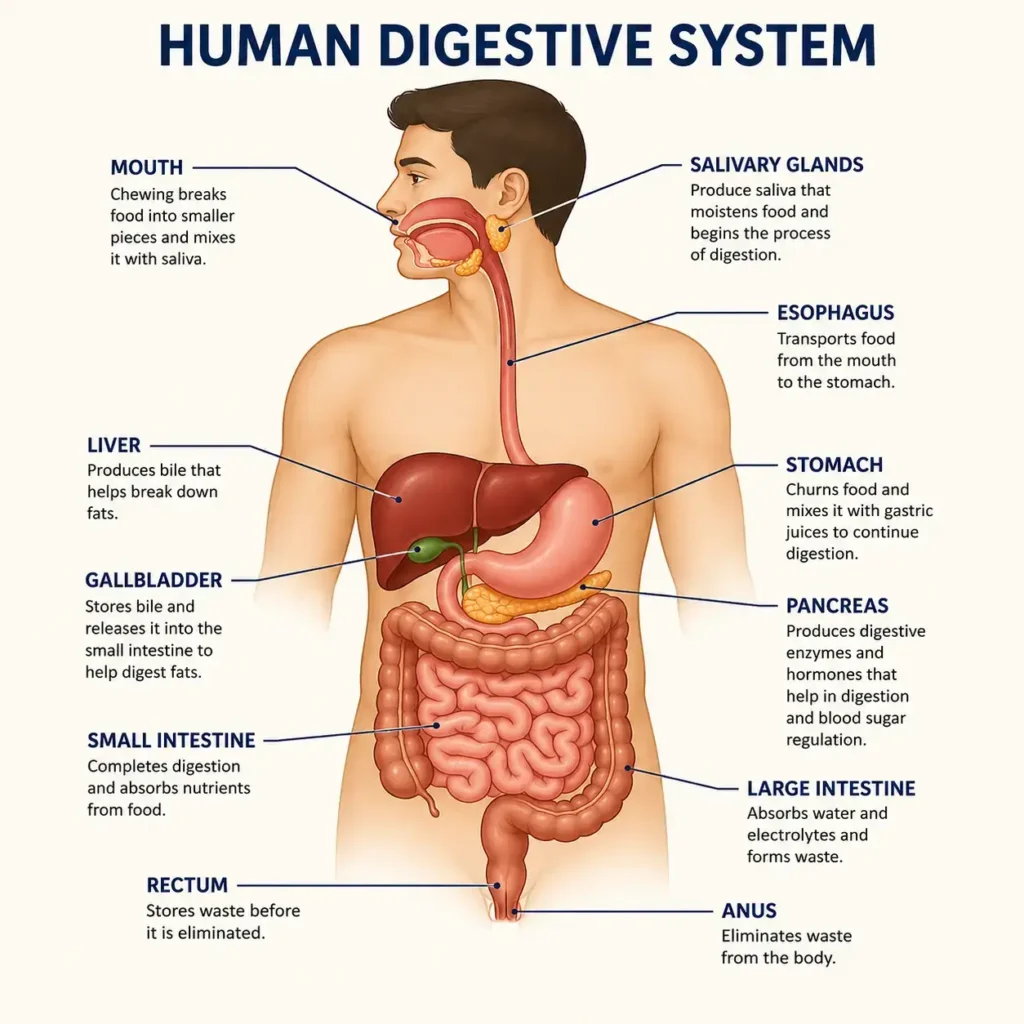
The digestive system is a complex network of organs that work together to process the food we eat. Its primary functions are to break food into smaller components, absorb nutrients, and eliminate waste materials.
The digestive process generally follows these stages:
1. Mouth
Digestion begins in the mouth, where chewing breaks food into smaller pieces. Saliva helps moisten food and contains enzymes that begin the digestion of certain nutrients.
2. Esophagus
After swallowing, food travels through the esophagus, a muscular tube that carries food to the stomach through coordinated muscle movements known as peristalsis.
3. Stomach
The stomach mixes food with digestive juices, gradually breaking it down into a semi-liquid form. This stage plays an important role in preparing food for further digestion.
4. Small Intestine
Most nutrient absorption takes place in the small intestine. Digestive enzymes and other digestive fluids help break down carbohydrates, proteins, and fats into forms that the body can absorb.
5. Large Intestine
The large intestine absorbs water and electrolytes while preparing waste material for elimination. It is also home to a diverse community of microorganisms collectively known as the gut microbiota.
6. Rectum and Anus
Finally, waste products leave the body through the rectum and anus as part of the body’s normal elimination process.
Although digestion is often associated only with the stomach, every organ in this pathway contributes to efficient digestion. Maintaining healthy daily habits supports the normal functioning of the digestive system as a whole.
Why Digestive Health Matters
The digestive system performs essential functions that contribute to overall wellness. While its primary role is to process food, digestion also supports the body’s ability to obtain nutrients needed for normal growth, energy production, and everyday functioning.
A well-functioning digestive system helps the body:
• Absorb nutrients from food • Maintain normal bowel function
• Support hydration by regulating water absorption
• Utilize vitamins and minerals efficiently
• Eliminate waste products
Many aspects of daily life can influence digestive comfort. Eating patterns, food choices, hydration, physical activity, sleep quality, and stress levels all play a role in digestive wellness.
Some people may occasionally experience digestive discomfort such as gas, bloating, indigestion, or acidity. These experiences can occur for many reasons and may sometimes be influenced by dietary or lifestyle habits. Understanding these factors can help individuals make informed decisions that support everyday digestive health.
Rather than focusing on quick fixes, building consistent healthy habits often provides a stronger foundation for long-term digestive wellness.
Common Digestive Problems (Overview)
Digestive concerns are common and can affect people of different ages. While occasional digestive discomfort may occur from time to time, understanding the most common digestive issues can help individuals recognize patterns and adopt healthier lifestyle habits.
Some frequently discussed digestive concerns include:
Gas
Gas forms naturally during digestion. Swallowing air while eating or drinking, along with the breakdown of certain foods in the digestive tract, can contribute to gas formation.
Read More: What Causes Gas and Bloating After Meals?
Bloating
Bloating refers to a feeling of fullness or tightness in the abdomen. It may occur after meals for various dietary and lifestyle reasons.
Read More: Why Do I Feel Bloated After Eating?
Acidity
Some individuals occasionally experience a burning sensation in the chest or upper stomach after eating certain foods or large meals.
Read More: Difference Between Gas and Acidity
Indigestion
Indigestion is a general term often used to describe digestive discomfort that may include fullness, heaviness after meals, or mild stomach discomfort.
Read More: Common Causes of Indigestion and Stomach Discomfort
Digestive Discomfort Related to Eating Habits.
Everyday habits such as eating too quickly, overeating, irregular meal timing, low water intake, or reduced physical activity may influence digestive comfort in some individuals.
Read More:
Gas and Bloating
Gas and bloating are among the most commonly discussed digestive concerns. Although they are often mentioned together, they are not the same.
Gas is a normal by-product of digestion. It forms when food is broken down in the digestive tract or when air is swallowed during eating, drinking, or talking. In most cases, gas is a natural part of the digestive process.
Bloating, on the other hand, is the sensation of fullness, tightness, or swelling in the abdomen. Some people experience bloating after large meals, while others notice it after eating certain foods or eating too quickly.
Several everyday habits may influence gas and bloating, including:
• Eating meals too quickly
• Drinking carbonated beverages
• Eating large portions
• Low physical activity
• Certain fibre-rich foods
• Individual food sensitivities
Occasional gas and bloating can often be influenced by lifestyle and dietary habits. Paying attention to eating patterns and maintaining an active lifestyle may support everyday digestive comfort.
Gas vs Acidity
Gas and acidity are sometimes confused because both may cause discomfort after meals. However, they are different digestive concerns.
Gas is associated with the buildup of air in the digestive tract and may lead to abdominal fullness, burping, or passing gas.
Acidity generally refers to symptoms that may occur when stomach acid moves upward into the food pipe, often causing a burning sensation in the chest or upper abdomen.
Although both conditions can occasionally occur after eating, their causes, symptoms, and management approaches may differ.
Factors that may influence digestive comfort include:
• Large meals
• Eating too quickly
• Certain spicy or fatty foods
• Lying down immediately after eating
• Irregular eating habits
Understanding the difference between gas and acidity can help individuals better identify their symptoms and make informed lifestyle choices.
Understanding Indigestion
Indigestion is a general term used to describe discomfort that some people experience during or after meals. It is not a disease itself but rather a collection of symptoms that may vary from person to person.
Some people may describe indigestion as:
• Feeling overly full after eating
• Mild upper stomach discomfort
• A sensation of heaviness
• Temporary bloating
• Burping after meals
Many factors may influence occasional indigestion, including meal size, eating speed, food choices, stress, and daily routines.
Maintaining balanced eating habits and paying attention to portion sizes may help support normal digestion as part of a healthy lifestyle.
Persistent or severe digestive symptoms should be evaluated by a qualified healthcare professional.
Healthy Eating Habits for Better Digestion
Healthy digestion is influenced not only by what we eat but also by how we eat.
Simple daily habits can make a meaningful difference in digestive comfort.
Healthy eating habits include:
Eat Slowly
Chewing food thoroughly allows digestion to begin in the mouth and gives the body time to process meals more efficiently.
Maintain Regular Meal Timing
Eating meals at consistent times may help support normal digestive rhythms.
Avoid Overeating
Large meals may increase feelings of heaviness or digestive discomfort for some individuals.
Stay Hydrated
Adequate water intake supports many normal body functions, including digestion. Include Fibre-Rich Foods Whole grains, fruits, vegetables, legumes, and other fiber-rich foods contribute to a balanced diet.
Limit Highly Processed Foods
A balanced dietary pattern that emphasizes whole foods may support overall digestive wellness.
Developing healthy eating habits is often more beneficial than relying on occasional dietary changes.
Read More:
Foods That May Support Healthy Digestion
A balanced diet provides the nutrients needed to support normal digestive function. While no single food guarantees digestive wellness, a variety of nutrient-rich foods can contribute to a healthy eating pattern.
Examples include:
Fruits:
Many fruits provide dietary fiber along with naturally occurring vitamins and minerals.
Vegetables
Vegetables contribute fiber and other nutrients that support overall health.
Whole Grains
Whole grains are an important source of dietary fiber and can be included as part of a balanced diet.
Fermented Foods
Foods such as yogurt and other fermented options are commonly included in balanced diets because they contain beneficial microorganisms.
Legumes
Beans, lentils, and chickpeas provide both fiber and plant-based protein.
Nuts and Seeds
These foods contain healthy fats and other nutrients that complement a balanced eating pattern.
The best dietary approach is one that includes a variety of foods rather than focusing on any single ingredient.
Related Articles:
Mini Summary
Healthy digestion is influenced by multiple factors, including food choices, eating habits, hydration, physical activity, and lifestyle. Understanding common digestive concerns such as gas, bloating, acidity, and indigestion can help individuals make informed decisions that support everyday digestive wellness.
Hydration and Digestion
Water plays an essential role in many normal body functions, including digestion. Staying adequately hydrated supports the movement of food through the digestive tract and helps the body process nutrients as part of a balanced lifestyle.
Drinking enough water throughout the day may contribute to normal digestive function by supporting:
• The movement of food through the digestive system
• Soft, well-formed stools
• Normal bowel function
• Overall body hydration.
Hydration needs vary depending on age, activity level, climate, and individual health conditions. Rather than waiting until you feel thirsty, developing the habit of drinking water regularly throughout the day can be a simple way to support overall wellness.
Water alone is not the only source of hydration. Fruits, vegetables, soups, and other fluids also contribute to daily fluid intake.
Tips for Staying Hydrated
• Carry a reusable water bottle.
• Drink water between meals. • Increase fluid intake during hot weather or physical activity.
• Include water-rich fruits and vegetables in your meals. • Limit sugar-sweetened beverages as part of a balanced diet.
Maintaining adequate hydration, together with healthy eating habits and regular physical activity, forms an important part of digestive wellness.
Related Article
Does Walking After Meals Support Digestion?
Light physical activity after meals is a common wellness habit practiced by many people. While everyone’s digestive response is different, gentle movement after eating may contribute to overall comfort as part of an active lifestyle.
Walking is a low-impact activity that helps the body stay active without placing excessive strain on the joints.
A short walk after meals may become part of a healthy daily routine because it encourages regular movement and reduces long periods of sitting.
Tips for Walking After Meals
• Choose a comfortable pace. • Wait a few minutes after eating before starting.
• Walk for approximately 10 to 20 minutes.
• Stay hydrated throughout the day.
• Wear comfortable footwear.
Walking should be viewed as one element of a healthy lifestyle rather than a substitute for balanced nutrition.
Related Article:
How Meal Timing May Affect Digestion
Meal timing is an often-overlooked aspect of digestive wellness. Along with food quality and portion size, eating meals at consistent times may help establish regular eating patterns.
Irregular meal schedules can sometimes lead people to skip meals or overeat later in the day. Establishing a routine may encourage more mindful eating habits.
Healthy Meal Timing Habits:
Eat at Consistent Times
Regular meal schedules can help build predictable daily routines.
Avoid Skipping Meals
Skipping meals may increase hunger later in the day, making it easier to overeat.
Eat Mindfully
Taking time to enjoy meals without distractions encourages slower eating.
Avoid Very Large Late-Night Meals
Many people find that lighter evening meals fit more comfortably into their daily routine.
Meal timing is only one aspect of digestive wellness. It works best when combined with balanced food choices, hydration, and physical activity.
Related Articles:
Fiber and Digestive Health
Dietary fiber is an important part of a balanced eating pattern and is commonly associated with digestive wellness.
Unlike many other nutrients, fiber is not completely digested by the body. Instead, it moves through the digestive system and contributes to normal bowel function.
Many everyday foods naturally contain fiber, including:
• Whole grains
• Fruits
• Vegetables
• Legumes
• Nuts
• Seeds
Including a variety of fiber-rich foods in meals may support digestive wellness as part of a healthy lifestyle.
When increasing fiber intake, it is generally helpful to do so gradually while also maintaining adequate hydration.
Everyday Ways to Include More Fibre
• Add fresh fruit to breakfast. • Choose whole grains when possible.
• Include vegetables with lunch and dinner.
• Snack on nuts or seeds in moderation.
• Include beans or lentils in weekly meals.
Balanced nutrition, rather than focusing on any single nutrient, remains the foundation of digestive wellness.
Lifestyle Tips for Better Digestion
Digestive wellness is influenced by many daily habits beyond food choices. Small, consistent lifestyle practices often contribute to long-term digestive comfort.
Stay Physically Active
Regular movement supports overall health and complements healthy eating habits.
Manage Stress
Stress may influence digestive comfort in some individuals. Relaxation techniques, hobbies, and regular breaks may help support overall well-being.
Get Enough Sleep
Quality sleep is an important part of maintaining overall health, including digestive wellness.
Eat Mindfully
Avoid rushing through meals. Paying attention to portion sizes and chewing food thoroughly encourages more mindful eating.
Maintain a Balanced Diet
Aim to include a variety of fruits, vegetables, whole grains, legumes, healthy fats, and protein sources.
Avoid Tobacco and Limit Alcohol
Avoiding tobacco and limiting alcohol consumption are widely recommended as part of a healthy lifestyle.
Listen to Your Body
People respond differently to foods. Paying attention to how your body reacts to certain eating habits can help you make informed dietary choices.
Developing healthy routines gradually is often more sustainable than making sudden lifestyle changes.
Daily Digestive Wellness Checklist
Small everyday habits can contribute to long-term digestive wellness.
✓ Eat meals at regular times.
✓ Chew food thoroughly.
✓ Include fiber-rich foods.
✓ Drink enough water throughout the day.
✓ Stay physically active.
✓ Take a short walk after meals when appropriate.
✓ Get adequate sleep.
✓ Manage stress through healthy coping strategies.
✓ Eat a balanced and varied diet.
✓ Pay attention to your body’s responses to foods and eating habits.
Healthy Digestion at a Glance
Habit | Why It Matters |
Drink enough water | Supports normal digestion and hydration |
Eat slowly | Encourages mindful eating |
Include fibre | Supports normal bowel function |
Stay active | Complements a healthy lifestyle |
Maintain meal timing | Helps build regular eating patterns |
Sleep well | Supports overall wellness |
FAQs
Q1. What causes poor digestion
- Eating fast
- Low fibre intake
- Skipping meals
- Low water intake
- High fried and processed food use
Q2. How much water helps digestion
- 2 to 3 litres daily for most adults
- Spread intake across the day
- Drink water between meals, not only during meals
Q3. Which foods support digestion
- Fruits like banana, papaya, apple
- Vegetables like spinach, bottle gourd
- Whole grains like oats, brown rice
- Fermented foods like curd
Q4. Why gas and acidity happen often
- Overeating
- Late-night meals
- Spicy or oily food
- Irregular eating schedule
Q5. How long does digestion take
- Light meals: 2 to 4 hours
- Heavy meals: 4 to 6 hours
- Fatty meals take longer
Conclusion
Good digestion depends on daily habits.
- Eat on fixed timing
- Add fiber in every meal
- Walk after meals for 10 to 15 minutes
- Avoid overeating
- Keep hydration steady through the day
Small changes reduce gas, bloating, and heaviness. Consistency matters more than quick fixes.