
Quick Answer
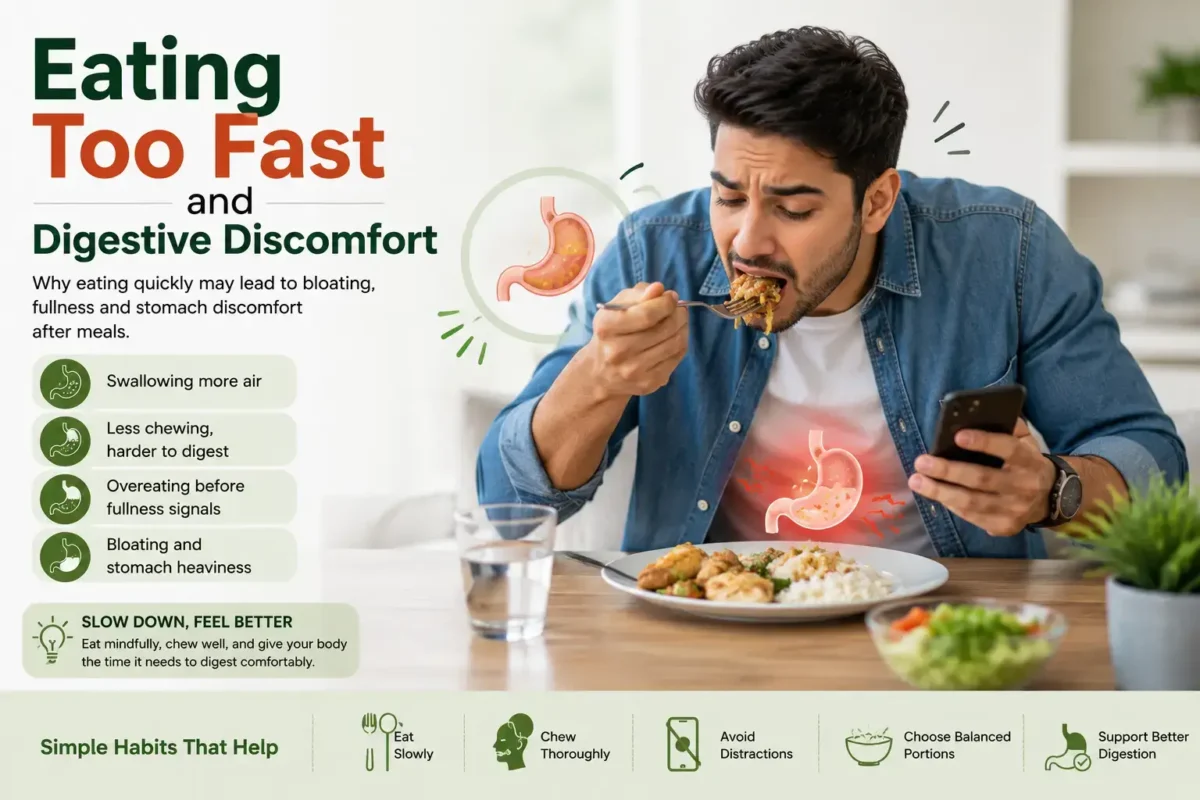
Eating too fast and digestive discomfort are often linked because rushing through meals may affect how comfortably the digestive system processes food. People who eat quickly may swallow more air, chew food less thoroughly, and consume larger portions before their body has time to recognise fullness. These factors can contribute to feelings of bloating, heaviness, fullness, or post-meal discomfort.
This article is part of our Complete Guide to Digestive Health.
Read the Complete Guide to Digestive Health
Why Does Eating Speed Matter?
In today’s busy lifestyle, many people eat while working, watching screens, driving, or multitasking.
As a result, meals are often finished within minutes.
While this may save time, eating too quickly can sometimes leave people feeling uncomfortable after meals.
Digestive comfort is influenced not only by what you eat but also by how you eat.
How Eating Too Fast May Affect Digestion
1. Increased Air Swallowing
When people eat rapidly, they often swallow more air along with their food.
This extra air can contribute to:
- Bloating
- Burping
- Abdominal pressure
- Temporary fullness
The faster the meal, the greater the likelihood of swallowing excess air.
2. Less Thorough Chewing
Digestion begins in the mouth.
Chewing helps break food into smaller pieces before it reaches the stomach.
When meals are rushed:
- Food may not be chewed adequately
- Larger food particles enter the digestive system
- Some people report feeling heavier after meals
Taking time to chew thoroughly is often considered part of mindful eating habits.
3. Overeating Before Fullness Signals Arrive
The body needs time to recognize fullness.
People who eat very quickly may consume more food before noticing they are satisfied.
This can lead to:
- Overeating
- Stomach heaviness
- Fullness after meals
- Digestive discomfort
Slower eating may help people become more aware of their hunger and fullness cues.
4. Feeling Uncomfortably Full
One of the most common complaints after fast eating is feeling overly full.
People may experience:
- Tightness around the stomach
- Abdominal pressure
- Reduced comfort after meals
- Sluggishness
These sensations are often linked to meal size and eating speed.
Signs You May Be Eating Too Fast
Some common signs include:
- Finishing meals much faster than others
- Rarely chewing food thoroughly
- Frequently feeling overly full
- Regular post-meal bloating
- Burping after eating
- Eating while distracted
Recognizing these habits is often the first step toward improving digestive comfort.
Simple Habits That May Support More Comfortable Eating
- Put Down Your Utensils Between Bites
- Brief pauses can naturally slow eating speed.
- Chew Food Thoroughly
Many people find that paying attention to chewing helps create a more relaxed eating experience.
Minimize Distractions
Eating without phones, television, or work-related distractions may encourage mindful eating.
Eat Smaller, Balanced Portions
Moderate portion sizes may feel more comfortable than very large meals.
Take Time to Enjoy Meals
Eating slowly allows the body more time to recognize fullness and satisfaction.
Does Eating Slowly Improve Digestive Comfort?
Many people report feeling more comfortable after meals when they slow down their eating pace.
Potential benefits may include:
- Reduced bloating
- Less stomach heaviness
- Better awareness of fullness
- More enjoyable meal experiences
Individual experiences can vary, but mindful eating is widely encouraged as part of healthy eating habits.
Frequently Asked Questions – Eating Too Fast and Digestive Discomfort
Q1. Can eating too fast cause bloating?
Eating quickly may increase air swallowing, which can contribute to bloating and abdominal pressure.
Q2. Why do I feel heavy after eating quickly?
Fast eating may lead to larger food intake, reduced chewing, and feelings of fullness or heaviness after meals.
Q3. Does chewing food properly matter?
Chewing is an important part of the digestive process because it helps break food into smaller pieces before swallowing.
Q4. How can I stop eating too fast?
Eating without distractions, taking smaller bites, and chewing thoroughly may help slow your eating pace.
Q5. Is eating slowly better for digestion?
Many people find that slower eating supports a more comfortable post-meal experience and helps them recognize fullness sooner.
Conclusion
Eating too fast and digestive discomfort are commonly connected. Rapid eating may increase air swallowing, reduce chewing, and make it easier to overeat before fullness signals appear. Slowing down, chewing thoroughly, and practicing mindful eating habits may help support a more comfortable digestive experience after meals.
Explore Our Digestive Care Products
Related Topic:
- Complete Guide to Digestive Health
- What Causes Gas and Bloating After Meals?
- Difference Between Gas and Acidity
- Common Causes of Indigestion and Stomach Discomfort
- Why Do I Feel Bloated After Eating
- Foods That Commonly Cause Gas and Bloating
- How Eating Habits Affect Digestion
- Can Drinking More Water Help Digestion?
- Does Walking After Meals Help Digestion?
- Best Foods That May Support Healthy Digestion