
Quick Answer
“Signs of poor digestive habits” can include frequent bloating, stomach heaviness after meals, excessive gas, irregular eating patterns, digestive discomfort, and feeling overly full after eating. While occasional digestive symptoms are common, certain daily habits may influence how comfortable a person feels before, during, and after meals.
This article is part of our Complete Guide to Digestive Health.
Read the Complete Guide to Digestive Health
Why Digestive Habits Matter
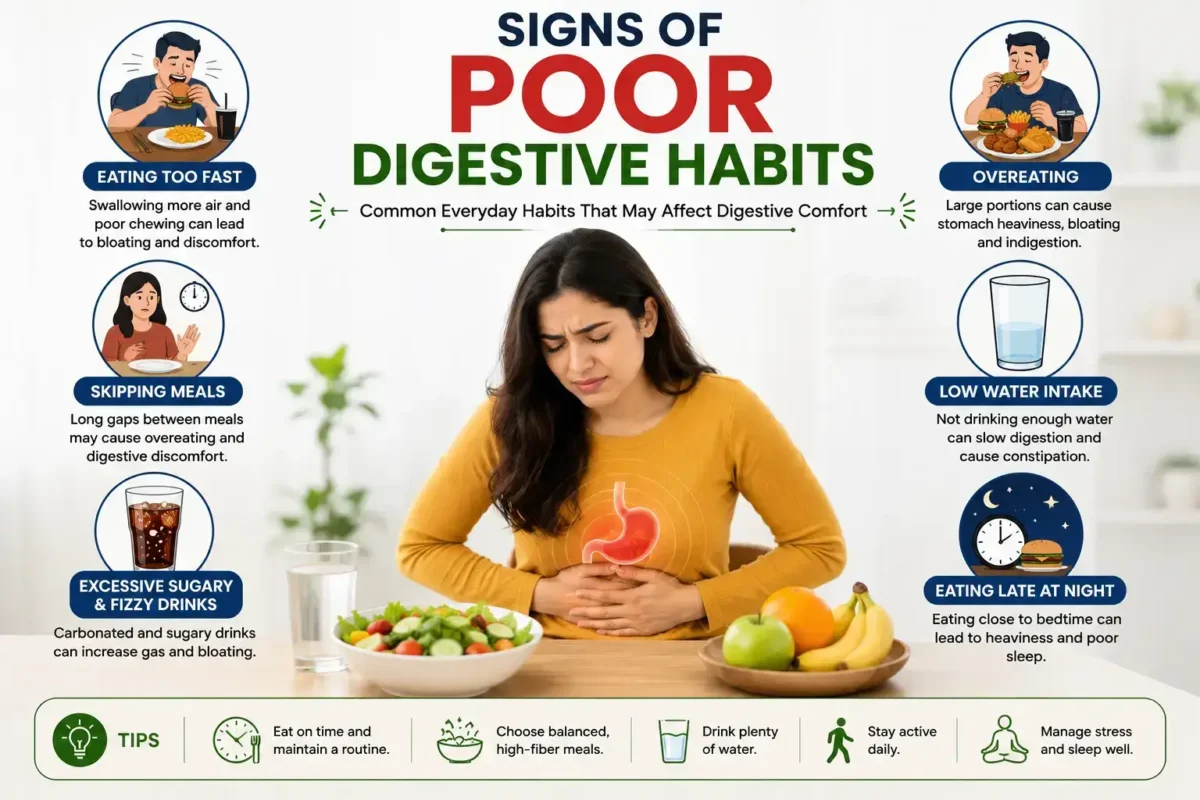
Many people focus on what they eat but pay less attention to how they eat. Daily habits such as eating too quickly, skipping meals, overeating, inadequate hydration, or eating late at night may affect digestive comfort.
Over time, these habits can contribute to recurring digestive complaints.
Common Signs of Poor Digestive Habits
1. Frequent Bloating
Occasional bloating can happen to anyone. However, frequent bloating after meals may indicate that eating habits, food choices, or meal patterns need attention. People often describe bloating as:
- A tight stomach
- Abdominal fullness
- Pressure around the waist
- Feeling swollen after meals
2. Stomach Heaviness After Eating
Feeling heavy after every meal is another common sign.
This may occur when:
- Meals are very large
- Food is eaten too quickly
- Portions exceed comfort levels
Many people notice improved comfort when meals are balanced and eaten more slowly.
3. Regular Gas or Burping
Gas is a normal part of digestion. However, frequent burping or excessive gas may sometimes be linked to habits such as:
- Fast eating
- Carbonated beverages
- Large meals
- Swallowing excess air
4. Skipping Meals Frequently
Busy schedules often lead people to skip breakfast, lunch, or other meals. Long gaps between meals may result in:
- Increased hunger
- Fast eating
- Larger portions later in the day
These patterns can affect digestive comfort.
5. Eating Too Fast
People who finish meals quickly may:
- Swallow more air
- Chew less thoroughly
- Eat beyond fullness
This can contribute to bloating and post-meal discomfort.
6. Frequent Overeating
Overeating occasionally happens during celebrations or social gatherings. When it becomes a regular habit, people may experience:
- Fullness
- Stomach heaviness
- Digestive discomfort
- Reduced meal comfort
7. Low Water Intake
Hydration supports many normal bodily functions, including digestion. Some people find that inadequate water intake is associated with reduced digestive comfort throughout the day.
8. Irregular Meal Timing
Eating at completely different times each day may make it harder to maintain consistent eating habits.
Some individuals report better digestive comfort when meals follow a more regular schedule.
Habits That May Support Better Digestive Comfort
Eat Slowly
Taking time during meals may help reduce air swallowing and improve meal awareness.
Stay Hydrated
Regular water intake is often included in healthy digestive routines.
Avoid Oversized Meals
Moderate portions may feel more comfortable than very large meals.
Maintain Consistent Meal Times
Regular meal schedules may help support balanced eating habits.
Stay Physically Active
Daily movement is commonly associated with overall wellness and digestive comfort.
Frequently Asked Questions – Signs of Poor Digestive Habits
Q1. What are the most common signs of poor digestive habits?
Frequent bloating, stomach heaviness, overeating, fast eating, irregular meal timing, and digestive discomfort are among the most commonly reported signs.
Q2. Can eating too fast affect digestion?
Yes. Fast eating may increase air swallowing and reduce chewing, which can contribute to digestive discomfort.
Q3. Does skipping meals affect digestive comfort?
Long gaps between meals may lead to excessive hunger and larger food intake later in the day.
Q4. Can drinking water support digestion?
Adequate hydration is commonly considered part of healthy digestive habits.
Q5.
Eating slowly, staying hydrated, maintaining consistent meal times, and choosing balanced portions may help support digestive comfort.
Conclusionz
Recognizing the “signs of poor digestive habits” can help people make small lifestyle adjustments that support better digestive comfort. Paying attention to eating speed, meal timing, hydration, portion sizes, and daily routines may contribute to a more comfortable eating experience and overall digestive wellness.
Explore our Digestive care Products
Related Topic:
- Complete Guide to Digestive Health
- What Causes Gas and Bloating After Meals?
- Difference Between Gas and Acidity
- Common Causes of Indigestion and Stomach Discomfort
- Why Do I Feel Bloated After Eating
- Foods That Commonly Cause Gas and Bloating
- How Eating Habits Affect Digestion
- Can Drinking More Water Help Digestion?
- Does Walking After Meals Help Digestion?
- Best Foods That May Support Healthy Digestion
- Eating Too Fast and Digestive Discomfort