
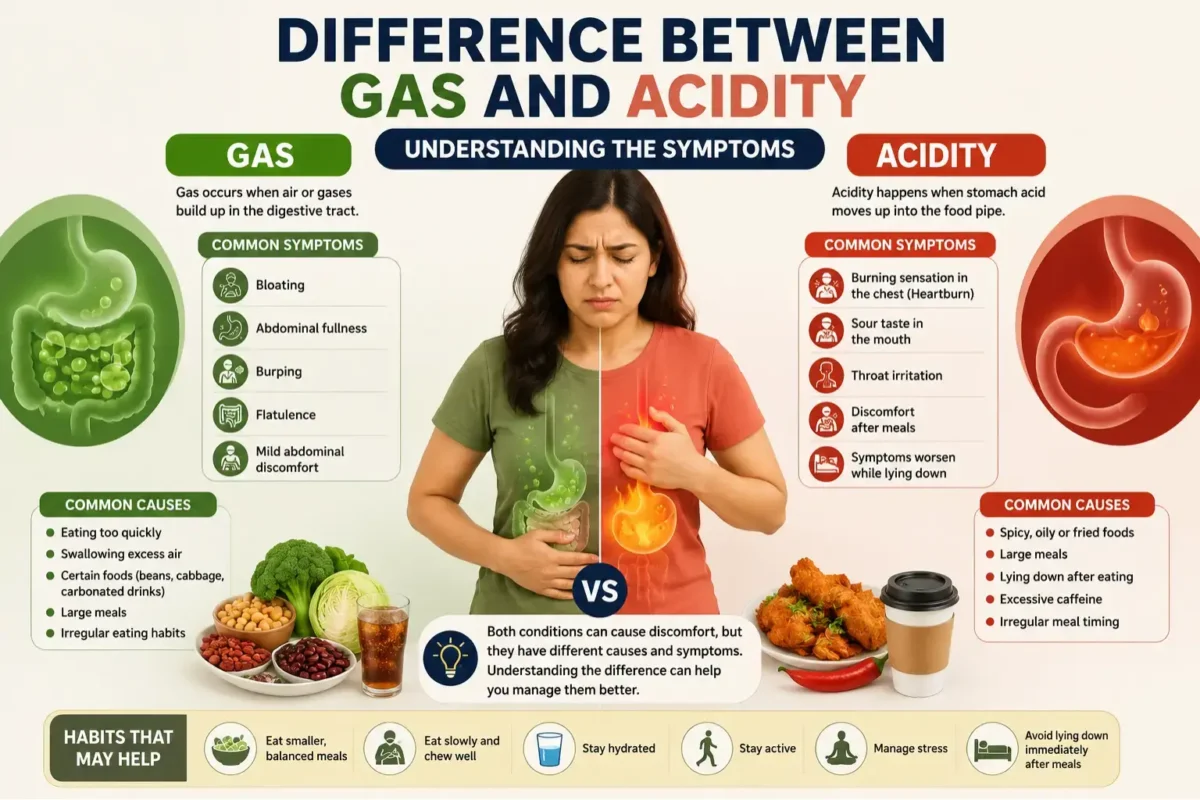
The difference between gas and acidity is often misunderstood because both conditions can cause digestive discomfort after meals. Many people use the words “gas” and “acidity” interchangeably, but they are actually two different digestive concerns. Gas is usually associated with bloating, abdominal pressure, burping, or passing gas, while acidity is more commonly linked to a burning sensation in the chest or upper stomach. Because some symptoms overlap, it is not unusual for people to mistake one condition for the other.
This article is part of our Complete Guide to Digestive Health.
Read the Complete Guide to Digestive Health
Gas or Acidity? Why People Often Get Confused
Imagine finishing a heavy meal and feeling uncomfortable thirty minutes later. Quick Answer
You may notice:
A tight feeling in the stomach
Frequent burping
Pressure in the abdomen
Burning behind the chest
Sour taste in the mouth
Many people simply describe all these symptoms as “gas.”
However, the actual cause may be gas, acidity, or sometimes a combination of both.
Understanding the difference can help you identify symptoms more accurately and discuss them more clearly with a healthcare professional when necessary.
What Does Gas Usually Feel Like?
Gas develops naturally during digestion. It can also occur when air is swallowed while eating or drinking.
People commonly describe gas as:
A feeling of fullness in the stomach
Abdominal tightness
Frequent burping
Passing gas
Pressure that improves after burping or passing gas
For example, after eating a large plate of rajma, chole, or a very heavy meal, some individuals may notice increased gas production and abdominal fullness.
What Does Acidity Usually Feel Like?
Acidity is typically associated with irritation caused by stomach acid. People often describe it as:
A burning sensation in the chest
Burning in the upper stomach area
Sour or bitter taste in the mouth
Discomfort that becomes more noticeable after lying down
A feeling of acid rising upward
Someone who eats a very spicy late-night dinner and immediately lies down may be more likely to notice these symptoms.
A Simple Way to Tell the Difference
If You Feel… It May Be More Commonly Associated With
Abdominal fullness Gas
Excess burping Gas
Passing gas frequently Gas
Tight stomach after meals Gas
Burning in the chest Acidity
Sour taste in the mouth Acidity
Symptoms worsen when lying down Acidity
Heartburn after meals Acidity
Can Gas and Acidity Happen Together?
Yes.
This is one reason many people become confused.
For example, after a large restaurant meal containing fried foods, soft drinks and spicy dishes, a person may experience:
- Bloating
- Burping
- Abdominal pressure
- Heartburn
- Upper stomach discomfort
In such situations, symptoms of gas and acidity may occur at the same time.
Everyday Habits That May Influence Digestive Comfort
Eat Slowly
Eating too quickly may increase swallowed air and contribute to digestive discomfort.
Avoid Very Heavy Meals
Large meals may increase feelings of fullness and digestive uneasiness.
Stay Active
A short walk after meals is often more comfortable than lying down immediately.
Notice Personal Food Triggers
Different people react differently to foods. Keeping track of meals may help identify patterns.
Maintain Regular Meal Timing
Irregular eating schedules can sometimes make digestive symptoms more noticeable.
Frequently Asked Questions-Difference Between Gas and Acidity
Q1. Is every stomach discomfort caused by gas?
No. Digestive discomfort can occur for many reasons, including gas, acidity, indigestion, food sensitivity, or other digestive factors.
Q2. Why does acidity feel like burning?
Acidity is often associated with stomach acid irritation, which may create a burning sensation in the chest or upper stomach area.
Q3. Does burping always mean gas?
Burping is commonly linked with gas, but it may also occur alongside other digestive symptoms.
Q4. Can spicy food trigger acidity?
Some individuals notice acidity symptoms after consuming spicy foods, although responses vary.
Q5. Can gas and acidity occur together?
Yes. Some people experience symptoms of both conditions after certain meals.
Conclusion
Although gas and acidity are often confused, they usually create different sensations. Gas is commonly linked to bloating, abdominal pressure and burping, while acidity is more often associated with heartburn, burning sensations and sour taste in the mouth. Paying attention to symptom patterns, meal habits and food choices may help you better understand your digestive comfort and overall well-being.
Related Topic:
Complete Guide to Digestive Health
What Causes Gas and Bloating After Meals?
Common causes of indigestion and stomach discomfort