
Quick Answer
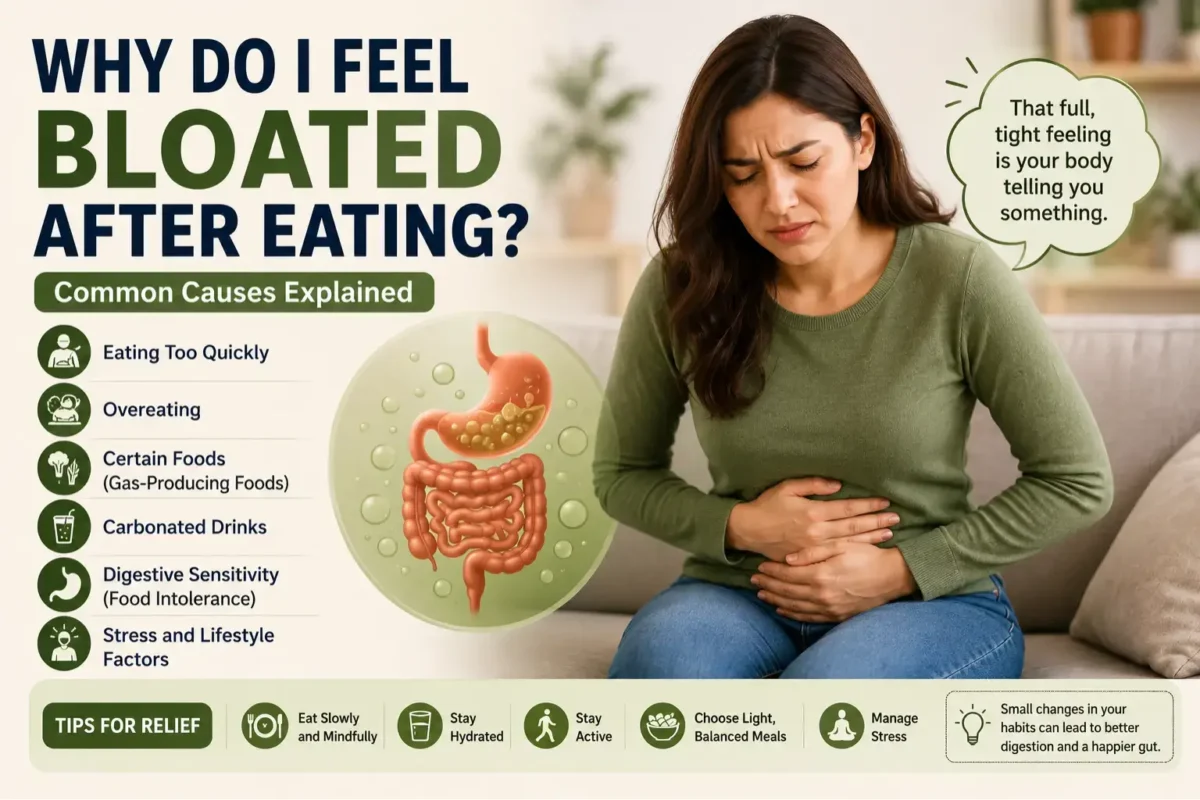
Feeling bloated after eating is a common digestive concern experienced by many people from time to time. If you often wonder, “Why Do I Feel Bloated After Eating?”, the answer may involve several factors. Bloating usually refers to a sensation of fullness, tightness, or swelling in the abdomen after a meal. Common causes may include eating too quickly, overeating, consuming certain foods, swallowing excess air, digestive sensitivity, or lifestyle habits. In many cases, occasional bloating improves with mindful eating, balanced meals, adequate hydration, and regular physical activity.
This article is part of our Complete Guide to Digestive Health.
Read the Complete Guide to Digestive Health
What Is Bloating?
Bloating is the feeling that your stomach or abdomen is unusually full, tight, or swollen. Some people describe it as a sensation of pressure or heaviness after eating.
Bloating can occur occasionally after large meals or when consuming foods that produce more gas during digestion. While occasional bloating is common, persistent or severe symptoms should be discussed with a qualified healthcare professional.
Common Symptoms of Bloating
People may experience bloating differently, but common symptoms can include:
- Feeling overly full after eating
- Tightness in the abdomen
- Stomach heaviness
- Increased gas
- Burping
- Mild abdominal discomfort
- Temporary abdominal swelling
These symptoms may appear shortly after eating or several hours later, depending on various digestive factors.
Why Do I Feel Bloated After Eating?
Several factors may contribute to bloating after meals.
1. Eating Too Quickly
When food is eaten rapidly, extra air can be swallowed along with food.
This swallowed air may contribute to bloating and digestive discomfort.
Helpful habits include:
Eating slowly
Taking smaller bites
Chewing food thoroughly
Avoiding rushed meals
2. Overeating
Large meal portions can make the stomach feel stretched and overly full, which may lead to bloating and heaviness.
To support digestive comfort:
- Eat moderate portions
- Avoid eating until uncomfortably full
- Consider smaller, balanced meals throughout the day
3. Certain Foods Can Produce More Gas
Some foods naturally create more gas during digestion.
Examples may include:
- Beans and lentils
- Chickpeas
- Cabbage
- Broccoli
- Cauliflower
- Onions
- Carbonated beverages
Individual responses vary, and not everyone experiences bloating from the same foods.
4. Carbonated Drinks
Soft drinks and sparkling beverages contain dissolved gases that may increase feelings of fullness and bloating in some people.
Choosing water more often may help reduce unnecessary gas intake.
5. Food Sensitivity
Some individuals may notice bloating after consuming certain foods that do not agree with their digestive system.
Possible examples include:
- Dairy products
- Highly processed foods
- Artificial sweeteners
- Very fatty meals
A food diary may help identify personal patterns.
6. Irregular Eating Habits
Skipping meals, eating at inconsistent times, or consuming very heavy meals late in the day may influence digestive comfort.
Maintaining regular meal schedules may support normal digestion.
7. Low Physical Activity
Physical activity helps support overall digestive wellness.
Long periods of sitting, especially after meals, may contribute to feelings of heaviness and bloating in some individuals.
Simple activities include:
- Short walks
- StretchingRegular daily movement
8. Stress and Emotional Factors
The digestive system is closely connected to the nervous system. During stressful periods, some individuals may notice digestive symptoms such as bloating, stomach discomfort, or changes in appetite.
Managing stress through healthy lifestyle habits may support overall well-being.
Foods Commonly Associated with Bloating
Food Group Examples
Legumes Beans, lentils, chickpeas
Cruciferous Vegetables Broccoli, cabbage, cauliflower
Carbonated Drinks Soda, sparkling beverages
Processed Foods Packaged snacks and convenience foods
High-Fat Foods Fried and oily foods
Individual tolerance varies significantly.
Everyday Habits That May Support Digestive Comfort
Stay Hydrated
Adequate water intake supports normal digestive processes and overall wellness.
Eat Mindfully
Pay attention to portion sizes and chewing habits while eating.
Stay Physically Active
Regular movement contributes to digestive comfort and healthy daily routines.
Maintain Regular Meal Timing
Consistent meal schedules may support digestive wellness.
Manage Stress
Relaxation techniques, quality sleep, and balanced daily routines may help support overall digestive health.
Difference Between Bloating, Gas and Indigestion
Condition Common Symptoms
Bloating Fullness, tightness, abdominal swelling
Gas Burping, flatulence, abdominal pressure
Indigestion Stomach discomfort, heaviness, fullness after meals
Although these conditions can occur together, they are not exactly the same.
When Should You Seek Medical Advice?
Consult a qualified healthcare professional if bloating
- Occurs frequently
- Persists for several weeks
- Interferes with daily activities
- Is accompanied by unexplained weight loss
- Causes severe abdominal pain
- Occurs with persistent nausea or vomiting
A healthcare professional can help identify the underlying cause and recommend appropriate evaluation if necessary.
Frequently Asked Questions- Why Do I Feel Bloated After Eating
Q1. Is bloating after eating normal?
Occasional bloating after meals is common and may occur due to eating habits, food choices, or digestive sensitivity.
Q2. Why do I feel bloated even after a small meal?
Some individuals may experience bloating due to digestive sensitivity, swallowing air while eating, food choices, or other digestive factors.
Q3. Can drinking water help reduce bloating?
Adequate hydration supports normal digestive processes and overall digestive wellness.
Q4. Which foods commonly cause bloating?
Foods such as beans, lentils, cabbage, broccoli, onions, and carbonated drinks are commonly associated with gas production and bloating in some people.
Q5. Can stress contribute to bloating?
Yes. Stress may influence digestive comfort and can contribute to symptoms such as bloating and stomach discomfort in some individuals.
Conclusion
Feeling bloated after eating is a common digestive concern that may result from eating habits, meal size, food choices, digestive sensitivity, hydration levels, or lifestyle factors. Understanding these potential causes can help individuals make informed decisions that support digestive comfort and overall digestive wellness.
Explore our Digestive Care Products
Related Topic:
- Complete Guide to Digestive Health
- What Causes Gas and Bloating After Meals? Common Reasons Explained
- Difference Between Gas and Acidity: Understanding the Symptoms
- Common causes of indigestion and stomach discomfort