
Quick Answer
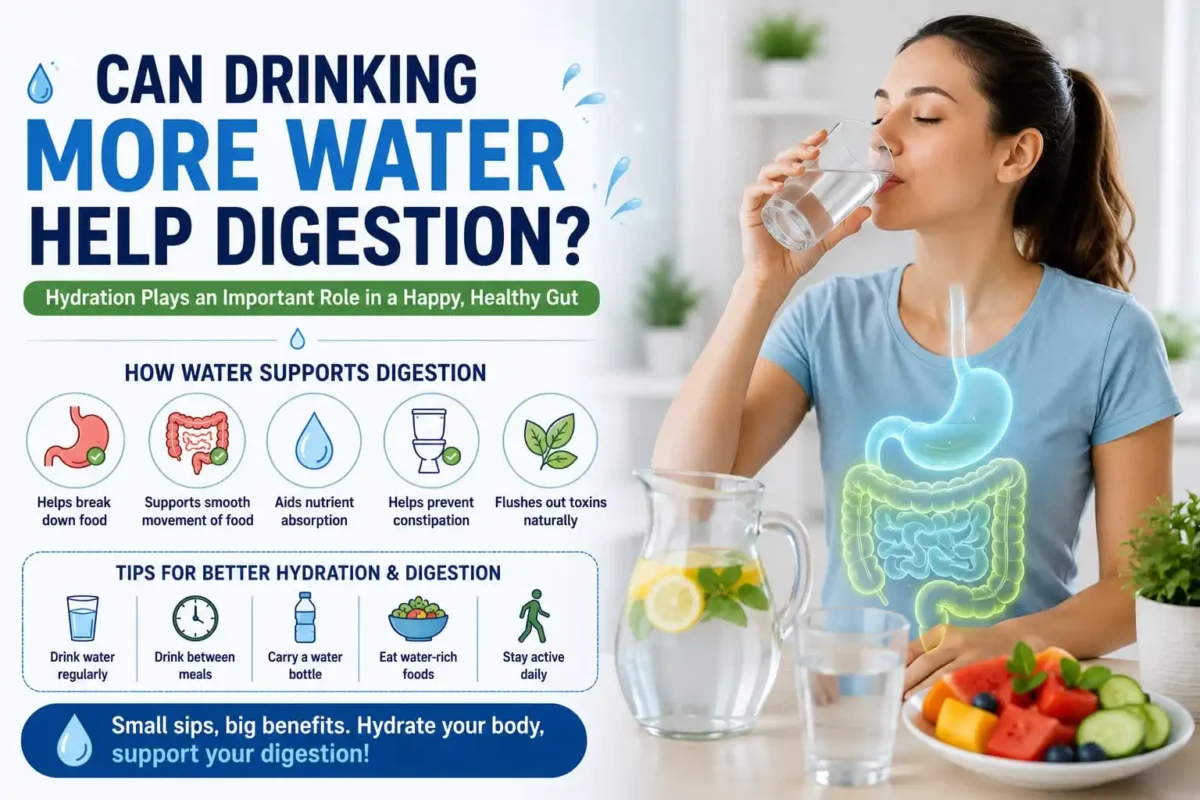
Can Drinking More Water Help Digestion? This is a common question among people looking to improve their digestive comfort and overall well-being. Water plays an important role in many normal body functions, including digestion. Staying properly hydrated may help support digestive comfort, smooth movement of food through the digestive system, and overall well-being. Some people also notice that adequate water intake helps them feel lighter and more comfortable after meals. However, hydration needs vary from person to person depending on diet, activity level, weather, and lifestyle habits.
This article is part of our Complete Guide to Digestive Health.
Read the Complete Guide to Digestive Health
Why Water Matters for Digestion
Most people know water is important for overall health, but fewer people think about its connection with digestion.
The digestive system depends on fluids to help process food and move it through the body efficiently. When daily water intake is too low, some individuals may notice feelings of heaviness, digestive sluggishness, or reduced digestive comfort.
Hydration is not a magic solution for every digestive concern, but healthy water intake habits are commonly associated with better digestive wellness.
What Happens During Digestion?
After eating, the digestive system begins breaking food into smaller components so nutrients can be absorbed.
This process involves:
- Digestive fluids Stomach activity
- Movement of food through the intestines
- Nutrient absorption
Water supports several of these natural digestive processes.
How Drinking Water May Support Digestion
1. Supports Smooth Digestion
Water helps food move through the digestive tract more comfortably.
Some people notice that low water intake may leave them feeling:
- Heavy after meals
- Bloated
- Sluggish
- Less comfortable digestively
2. May Help Support Regular Bowel Movements
Water helps maintain normal stool consistency.
When hydration is low, stool may become harder and more difficult to pass comfortably in some individuals.
Drinking enough water, along with balanced nutrition and fibre intake, is commonly associated with better digestive regularity. Adequate hydration may support smoother digestive movement.
3. Helps Balance High-Fibre
Foods Foods such as:
- Fruits Vegetables
- Oats
- Whole grains
- Lentils
contain fiber, which is important for digestion.
However, increasing ffiberintake without adequate hydration may sometimes contribute to feelings of bloating or heaviness.
Water and fiber often work together to support digestive comfort.
4. May Reduce Feelings of Fullness in
Some Situations Some people notice digestive discomfort after eating large meals quickly without adequate fluid intake.
While drinking excessive water during meals may not suit everyone, staying hydrated throughout the day may help support overall digestive comfort.
5. Supports Overall Body Functions
Hydration affects many systems in the body, including:
- Energy levels
- Physical performance
- Temperature regulation
- Overall wellness
Digestive comfort is often influenced by overall lifestyle habits, including hydration patterns.
Signs You May Not Be Drinking Enough Water
Some people may notice:
- Dry mouth
- Feeling tired
- Dark yellow urine
- Feeling unusually thirsty Reduced digestive comfort
These signs can occur for many reasons, but hydration habits are worth paying attention to.
Does Drinking Water During Meals Affect Digestion?
There are many myths surrounding water and meals.
Some people believe drinking water during meals always weakens digestion, but digestive responses vary between individuals.
For many people, moderate water intake during meals is completely normal.
The more important habit is maintaining healthy hydration throughout the entire day rather than drinking very large amounts at once.
Simple Hydration Habits That May Support Digestive Comfort
Habit Why It May Help
Drinking water regularly Supports normal body functions
Carrying a water bottle Encourages consistent hydration
Drinking water between meals Helps maintain hydration levels
Eating water-rich foods Adds to fluid intake
Staying active Supports overall wellness
Foods That Also Contribute to Hydration
Hydration does not come only from water.
Foods with high water content include:
- Cucumber
- Watermelon
- Oranges
- Tomatoes
- Soups
- Yogurt
These foods may contribute to daily fluid intake as part of a balanced diet.
Common Mistakes People Make With Hydration
Drinking Very Little Throughout the Day
Some people drink almost no water during the day and then consume large amounts suddenly at night.
Consistent hydration habits are generally more comfortable.
Replacing Water With Soft Drinks
Sugary or heavily carbonated beverages may not always provide the same feeling of hydration and may contribute to bloating in some individuals.
Ignoring Thirst Signals
Busy schedules often cause people to delay drinking water regularly.
Small consistent habits may be easier to maintain.
Frequently Asked Questions – Can Drinking More Water Help Digestion
Q1. Can drinking more water improve digestion?
Adequate hydration supports normal digestive processes and may help improve digestive comfort in some individuals.
Q2. Does water help reduce bloating?
Some people find that healthy hydration habits support digestive comfort, although bloating can have many possible causes.
Q3. Is warm water better for digestion?
Individual preferences vary. Some people prefer warm water, while others are comfortable with normal-temperature water.
Q4. How much water should a person drink daily?
Hydration needs vary depending on age, weather, activity level, diet, and overall lifestyle.
Q5. Can drinking too little water affect digestion?
Low hydration may contribute to digestive sluggishness or reduced digestive comfort in some individuals.
Conclusion
Drinking enough water is an important part of overall digestive wellness. Healthy hydration habits may support smoother digestion, digestive comfort, and regular digestive function in many individuals. While water alone is not a solution for every digestive concern, balanced hydration, mindful eating, physical activity, and healthy daily habits often work together to support overall well-being.
Explore Our Digestive Care Products
Related Topic:
- Complete Guide to Digestive Health
- How Eating Habits Affect Digestion
- Foods That Commonly Cause Gas and Bloating
- What Causes Gas and Bloating After Meals?
- Why Do I Feel Bloated After Eating?
- Difference Between Gas and Acidity
- Common Causes of Indigestion