
Quick Answer
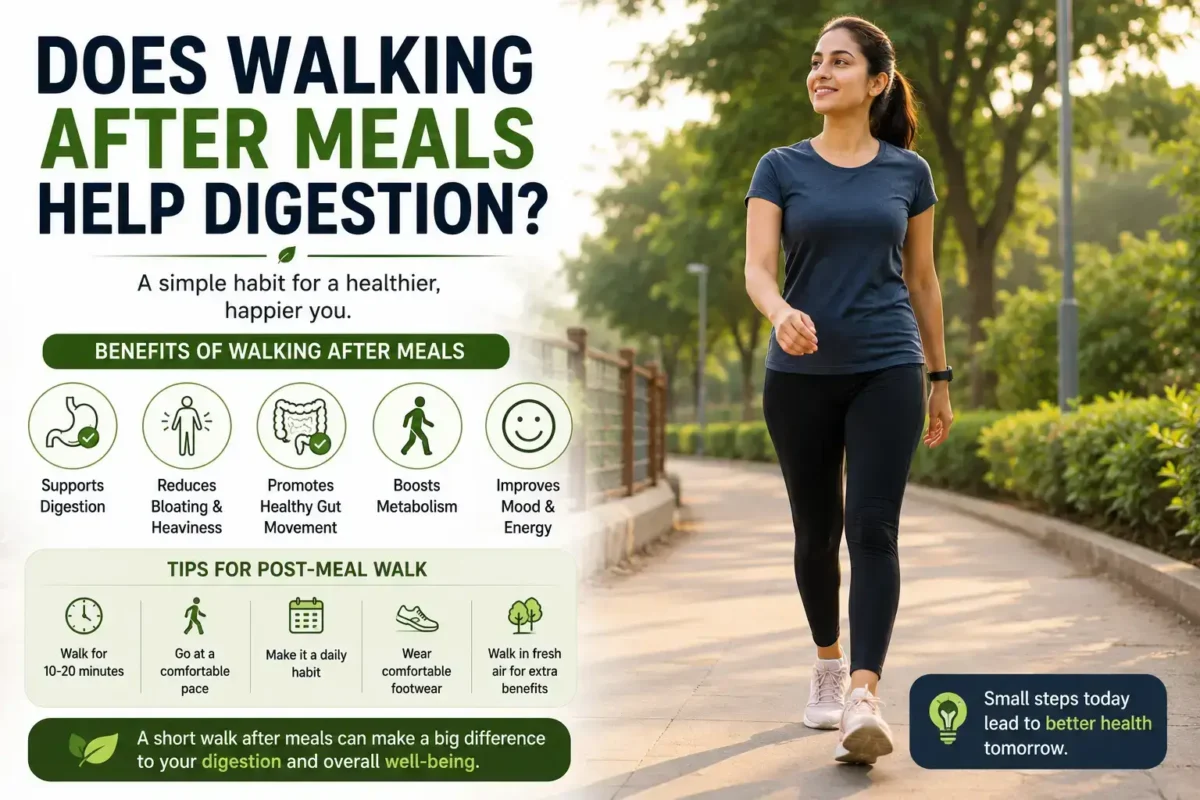
Many people wonder, “Does walking after meals help digestion?” A short walk after eating is commonly associated with feelings of lightness, movement, and digestive comfort in some individuals. Gentle walking may support normal body movement after meals and can be a simple daily habit for overall wellness. However, responses vary from person to person, and comfort levels may depend on meal size, timing, and individual lifestyle factors.
This article is part of our Complete Guide to Digestive Health.
Read the Complete Guide to Digestive Health
Why Do People Feel Heavy After Eating?
You may have experienced this before.
You finish lunch or dinner and suddenly feel:
- Unusually full
- Sluggish or sleepy
- Bloated
- Heavy in the stomach
- Less active than usual
Large meals, fast eating, rich foods, late dinners, or daily habits can sometimes contribute to this feeling.
Because of this, many people choose to take a short walk after eating instead of sitting continuously or lying down immediately.
Does Walking After Meals Help Digestion?
Walking after meals is a long-standing habit in many cultures.
A gentle walk may support digestive comfort in several practical ways.
Some people report feeling:
- Less heaviness after meals
- Improved comfort after eating
- Reduced sluggishness
- More physical movement during the day
This does not mean walking is a cure for digestive concerns, but it can be part of healthy daily routines.
How a Short Walk May Support Post-Meal Comfort
1. Encourages Gentle Body Movement
After eating, many people remain seated for long periods.
A short walk introduces light movement into the routine.
For example:
Instead of eating dinner and immediately sitting on the sofa for two hours, a person might take a relaxed 10-15 minute walk around the neighbourhood. Some individuals find this routine more comfortable.
2. May Help Reduce the “Heavy Meal” Feeling
Heavy meals can sometimes leave people feeling slow, overly full, or uncomfortable.
Gentle walking may help some individuals feel more active after eating.
This may be especially relevant after:
- Large dinners
- Celebration meals
- Restaurant meals
- Rich or oily foods
3. Supports Active Lifestyle Habits
Walking after meals is not only about digestion.
It can also help people build healthier daily movement habits.
Small routines often become easier to maintain than complicated exercise plans.
Examples:
- Walking after lunch break
- Evening family walks
- Short movement breaks after meals
4. May Encourage More Mindful Eating Habits
People who regularly walk after meals often become more aware of:
- Meal timing
- Portion sizes
- Food choices
- Daily activity patterns
These habits may indirectly support overall digestive wellness.
How Long Should You Walk After Eating?
There is no single rule that fits everyone.
Many people prefer:
- Short relaxed walks
- Comfortable pace
- 5-20 minutes of light movement
The goal is usually gentle activity rather than intense exercise immediately after eating.
Walking After Meals vs Lying Down After Eating
Some people eat and immediately lie down.
Others choose light movement.
Here is a simple comparison:
Habit Common Experience
Sitting for long periods May increase feelings of sluggishness in some individuals
Lying down immediately after meals Some people report discomfort after heavy meals
Gentle walking after meals Some individuals find it more comfortable
Individual experiences vary.
Common Mistakes People Make After Eating
Exercising Too Intensely
A relaxed walk is different from high-intensity training immediately after a large meal.
Some people may prefer lighter movement after eating.
Walking Immediately After Overeating
Very large meals can already cause discomfort.
Portion awareness still matters.
Ignoring Overall Eating Habits
Walking alone may not balance habits such as:
- Fast eating
- Frequent overeating
- Poor hydration
- Irregular meal timing
Daily routines work together.
Simple Post-Meal Habits That May Support Digestive Comfort
You do not need a complicated routine.
Small habits may include:
- Eating slowly
- Staying hydrated
- Avoiding very heavy late-night meals
- Gentle walking after meals
- Maintaining regular meal timing
- Staying physically active
Frequently Asked Questions: Does Walking After Meals Help Digestion
Q1. Is walking after meals good for digestion?
Many people find that gentle walking after meals supports feelings of comfort and movement after eating.
Q2. How long should I walk after eating?
Some individuals prefer short walks lasting around 5–20 minutes at a comfortable pace.
Q3. Can walking after meals reduce bloating?
Digestive experiences vary, but some people report feeling lighter or more comfortable after light movement.
Q4. Should I exercise intensely right after eating?
Some individuals may prefer gentle movement rather than intense exercise immediately after meals.
Q5. Is sitting after eating harmful?
Many people sit after meals. However, some individuals prefer short movement breaks as part of their daily routine.
Conclusion
Does walking after meals help digestion? Many people believe a short walk after eating helps them feel lighter, more comfortable, and less sluggish after meals. While responses differ between individuals, gentle post-meal movement can be a practical habit within a balanced lifestyle that includes mindful eating, hydration, regular activity, and healthy daily routines.
Explore Our Digestive Care Products
Related Topic:
- Complete Guide to Digestive Health
- How Eating Habits Affect Digestion
- Can Drinking More Water Help Digestion?
- Why Do I Feel Bloated After Eating?
- Foods That Commonly Cause Gas and Bloating
- What Causes Gas and Bloating After Meals?
- Difference Between Gas & Acidity
- Common Causes Of Indigestion