
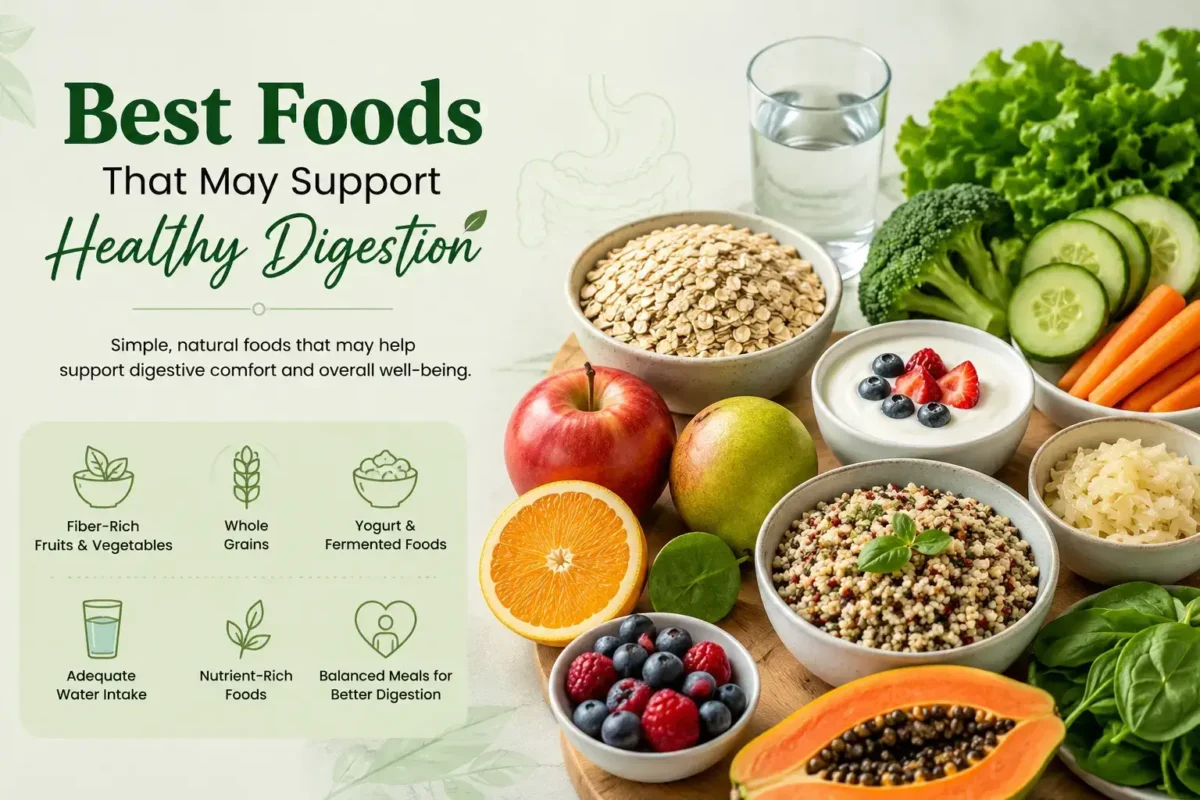
Quick Answer
Many people wonder which foods are considered the Best Foods That May Support Healthy Digestion. While digestive needs can vary from person to person, certain foods are commonly included in balanced eating patterns because they may support digestive comfort and overall well-being. Fruits, vegetables, whole grains, fermented foods, and adequate water intake are often recognized among the Best Foods That May Support Healthy Digestion and are frequently discussed as part of healthy digestive habits.
This article is part of our Complete Guide to Digestive Health.
Read the Complete Guide to Digestive Health
Why Food Choices Matter for Digestion
The digestive system works throughout the day to break down food and absorb nutrients. What you eat can influence how comfortable you feel after meals.
Some people notice:
- Less bloating
- Better digestive comfort
- Reduced feelings of heaviness
- More regular digestive patterns
when they focus on balanced food choices and healthy eating habits.
Rather than searching for a single “perfect” food, it is often more useful to look at overall dietary patterns.
1. Fiber-Rich Fruits
Many fruits contain fiber, which is an important part of a balanced diet.
Examples include:
- Apples
- Pears
- Oranges
- Papaya
- Berries
These fruits are commonly included in digestive-friendly meal plans because they provide fiber and water.
Fresh fruits can also be a convenient snack between meals.
2. Vegetables for Everyday
Digestive Wellness Vegetables provide nutrients and dietary fiber that are often associated with healthy eating habits.
Popular options include:
- Carrots
- Cucumbers
- Spinach
- Bottle gourd
- Pumpkin
Including a variety of vegetables in daily meals may help support overall digestive wellness.
3. Whole Grains
Whole grains are often preferred over highly refined grains because they contain more natural fiber.
Examples include:
- Oats
- Brown rice
- Whole wheat
- Millet-based foods
Many people include whole grains as part of a balanced approach to digestive health.
4. Yogurt and Fermented Foods
Fermented foods are frequently discussed in conversations about digestive wellness.
Examples include:
- Yogurt
- Traditional fermented foods
- Fermented dairy products
Individual responses can vary, but these foods are commonly included in balanced diets.
5. Adequate Water Intake
Food is only part of the picture. Hydration also plays an important role in daily wellness.
Many people focus on:
- Drinking water regularly
- Staying hydrated throughout the day
- Supporting overall digestive comfort
Healthy hydration habits often go hand in hand with balanced eating patterns.
6. Simple Home-Cooked Meals
Many people notice greater digestive comfort when meals are:
- Freshly prepared
- Moderate in portion size
- Less heavily processed
- Balanced with vegetables and grains
Simple meals can sometimes feel easier and more comfortable than very rich or oversized meals.
Foods That Some People Prefer in Moderation
Digestive comfort varies from person to person.
Some individuals choose to moderate foods that they personally associate with digestive discomfort, such as:
- Very heavy meals
- Fried foods
- Excessively spicy foods
- Large portions eaten quickly
Keeping a food diary may help identify personal patterns.
Everyday Habits That Work Alongside
Healthy Foods
Food choices are important, but daily habits also matter.
Consider:
Eating Slowly
Taking time during meals may support a more comfortable eating experience.
Staying Active
Regular movement is often part of a healthy lifestyle.
Drinking Enough
Water Hydration supports overall wellness.
Maintaining Consistent Meal Times
Regular eating patterns may help support digestive comfort.
Frequently Asked Questions – Best Foods That May Support Healthy Digestion
Q1. What foods are considered good for digestion?
Many people include fruits, vegetables, whole grains, and balanced home-cooked meals as part of digestive-friendly eating habits.
Q2. Is fiber important for digestive health?
Fiber is commonly recognized as an important component of a balanced diet and digestive wellness.
Q3. Can drinking water support digestion?
Adequate hydration is often discussed as part of healthy digestive habits.
Q4. Are fruits and vegetables helpful for digestive comfort?
Many fruits and vegetables contain fiber and water, making them common choices in balanced diets.
Q5. Is there one best food for digestion?
No single food works for everyone. Digestive comfort often depends on overall eating habits and individual preferences.
Conclusion
The “best foods that may support healthy digestion” are often simple, balanced, and rich in nutrients. Fruits, vegetables, whole grains, fermented foods, and adequate hydration are commonly included in healthy eating patterns. Combined with mindful eating habits and an active lifestyle, these choices may contribute to better digestive comfort and overall well-being.
Explore our Digestive Care Products
Related Topic:
- Complete Guide to Digestive Health
- What Causes Gas and Bloating After Meals?
- Difference Between Gas and Acidity
- Common Causes of Indigestion and Stomach Discomfort
- Why Do I Feel Bloated After Eating
- Foods That Commonly Cause Gas and Bloating
- How Eating Habits Affect Digestion
- Can Drinking More Water Help Digestion?
- Does Walking After Meals Help Digestion?