
Quick Answer
Many people wonder, “Why does stomach heaviness happen after meals?” A heavy feeling after eating can sometimes be linked with meal size, eating speed, food choices, hydration habits, eating patterns, or individual digestive comfort. Some people notice it after large meals, oily foods, late dinners, or eating too quickly. Occasional stomach heaviness after meals can happen from time to time, but frequent or persistent digestive discomfort deserves attention.
This article is part of our Complete Guide to Digestive Health.
Read the Complete Guide to Digestive Health
Have You Ever Felt Unusually Heavy After Eating?
You finish lunch or dinner expecting to feel satisfied.
Instead, you notice:
- A heavy stomach
- Fullness that lasts longer than expected
- Mild bloating
- Sleepiness after meals
- Reduced comfort or movement
Many people describe this simply as “food sitting in the stomach.”
The feeling can be uncomfortable and may affect work, relaxation, or everyday routines.
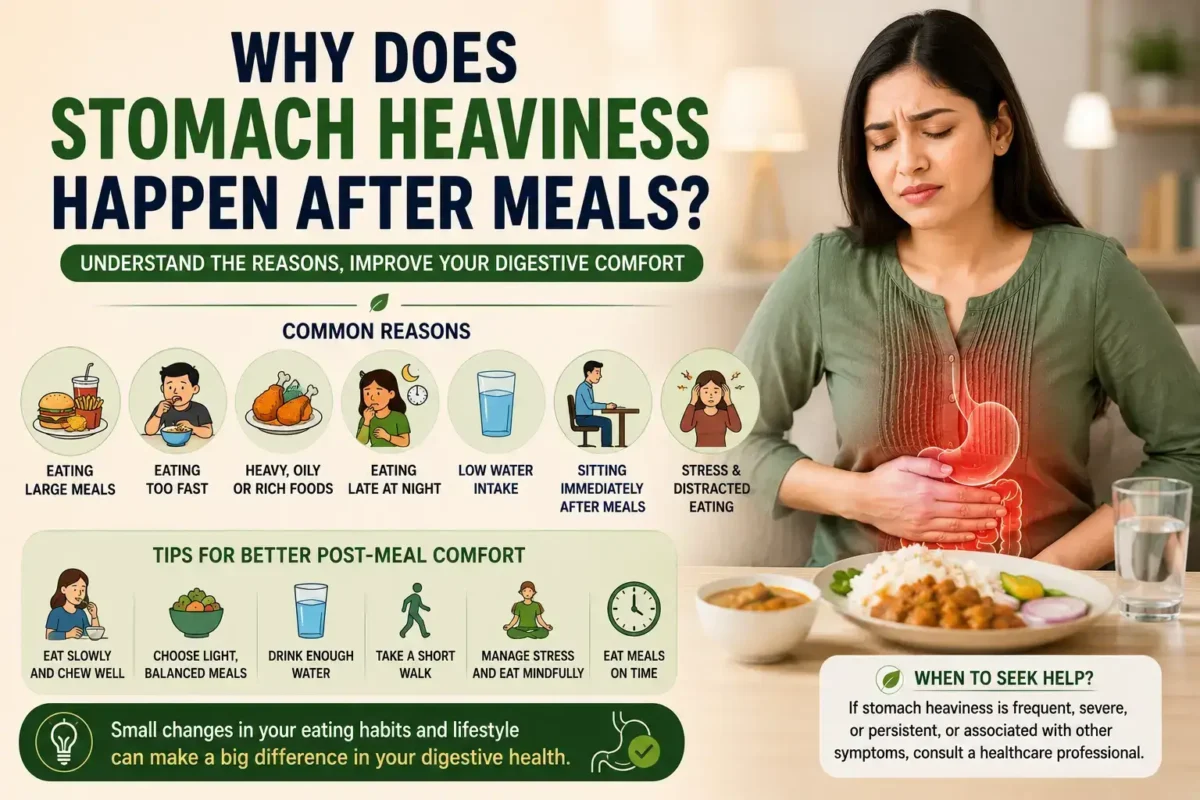
Why Does Stomach Heaviness Happen After Meals?
There is no single reason that explains every situation.
In many cases, stomach heaviness after eating may be influenced by a combination of eating habits, food choices, and personal digestive patterns.
1. Eating Very Large Meals
One common reason people feel heavy after eating is meal quantity.
Large portions can leave some individuals feeling:
- Overly full
- Sluggish
- Uncomfortable after meals
- Less interested in physical activity
This is especially common during:
- Celebration meals
- Restaurant dining
- Buffets
- Late-night heavy dinners
Sometimes the body simply needs more time to process a larger meal.
2. Eating Too Fast
Fast eating is often overlooked.
When people eat quickly, they may
- Swallow more air
- Chew food less thoroughly
- Eat beyond comfortable fullness
This combination may contribute to feelings of heaviness or digestive discomfort afterward.
For example, rushing through lunch during a busy workday can feel very different from eating the same meal slowly and calmly.
3. Heavy, Rich, or Oily Foods
Some meals naturally feel heavier than others.
Examples may include:
- Fried foods
- Rich gravies
- Fast food meals
- Very creamy dishes
- Large spicy dinners
Different people respond differently to foods, but some individuals notice more digestive heaviness after rich or oversized meals.
4. Eating Late at Night
Late dinners can feel less comfortable for some people, particularly when meals are heavy.
People sometimes report:
- Fullness before sleep
- Burning sensations
- Stomach heaviness
- Post-meal discomfort while lying down
Meal timing may influence how comfortable a person feels after eating.
5. Low Water Intake
Hydration habits can also matter.
Some individuals who drink very little water throughout the day may notice reduced digestive comfort.
Balanced hydration is often discussed alongside healthy eating habits and digestive wellness.
6. Sitting Immediately After Meals
Many people eat and remain seated for long periods afterward.
A short walk or light movement after meals feels more comfortable for some individuals compared with continuous sitting.
Lifestyle patterns may influence post-meal comfort levels.
7. Stress and Distracted Eating
Eating while:
Working
Watching screens
Feeling anxious
Rushing through meals
may affect how people experience digestion.
Some individuals notice greater awareness of digestive discomfort during stressful periods.
Signs Your Eating Habits May Be Contributing to Stomach Heaviness
You may want to observe your routine if stomach heaviness often appears after:
- Large meals
- Fast eating
- Heavy evening dinners
- Skipping meals and overeating later
- Eating under stress
- Frequent restaurant or takeaway meals
Small patterns can sometimes reveal useful clues.
Habits That May Support Better Post-Meal Comfort
Simple changes can make routines feel easier.
Some people try:
Eating Slowly
Taking time during meals may support more comfortable eating
Watching Portion Sizes
Moderate portions may feel lighter for some individuals.
Staying Hydrated
Healthy water intake habits are part of overall digestive wellness.
Light Movement After Meals
Gentle walking after meals is a habit many people prefer.
Paying Attention to Food Triggers
Keeping track of meals and symptoms may help identify personal patterns.
Frequently Asked Questions – Why Does Stomach Heaviness Happen After Meals
Q1. Why do I feel sleepy and heavy after meals?
Some people notice tiredness or heaviness after large meals, rich foods, or heavy lunches.
Q2. Can eating too fast cause stomach heaviness?
Eating quickly may contribute to feelings of fullness, bloating, or digestive discomfort in some individuals.
Q3. Do oily foods make people feel heavy after eating?
Some people report greater heaviness after rich, fried, or very large meals.
Q4. Can water help with digestive comfort?
Healthy hydration habits are commonly linked with overall digestive wellness.
Q5. Should I worry about stomach heaviness after meals?
Occasional heaviness can happen. If symptoms become frequent, severe, persistent, or interfere with daily life, professional medical guidance is appropriate.
Conclusion
“Why does stomach heaviness happen after meals?” For many people, the answer may involve eating habits, meal size, food choices, hydration patterns, and lifestyle routines. Paying attention to how you eat, what you eat, and how your body feels afterward may help you better understand your digestive comfort and daily wellness.
Explore Our Digestive Care Products
Related Topic:
- Complete Guide to Digestive Health
- What Causes Gas and Bloating After Meals?
- How Eating Habits Affect Digestion
- Does Walking After Meals Help Digestion?
- Can Drinking More Water Help Digestion?
- Foods That Commonly Cause Gas and Bloating
- Difference Between Gas And Acidity
- Common Causes Of Indigestion
- Why Do I Feel Bloated After Eating