
Quick Answer
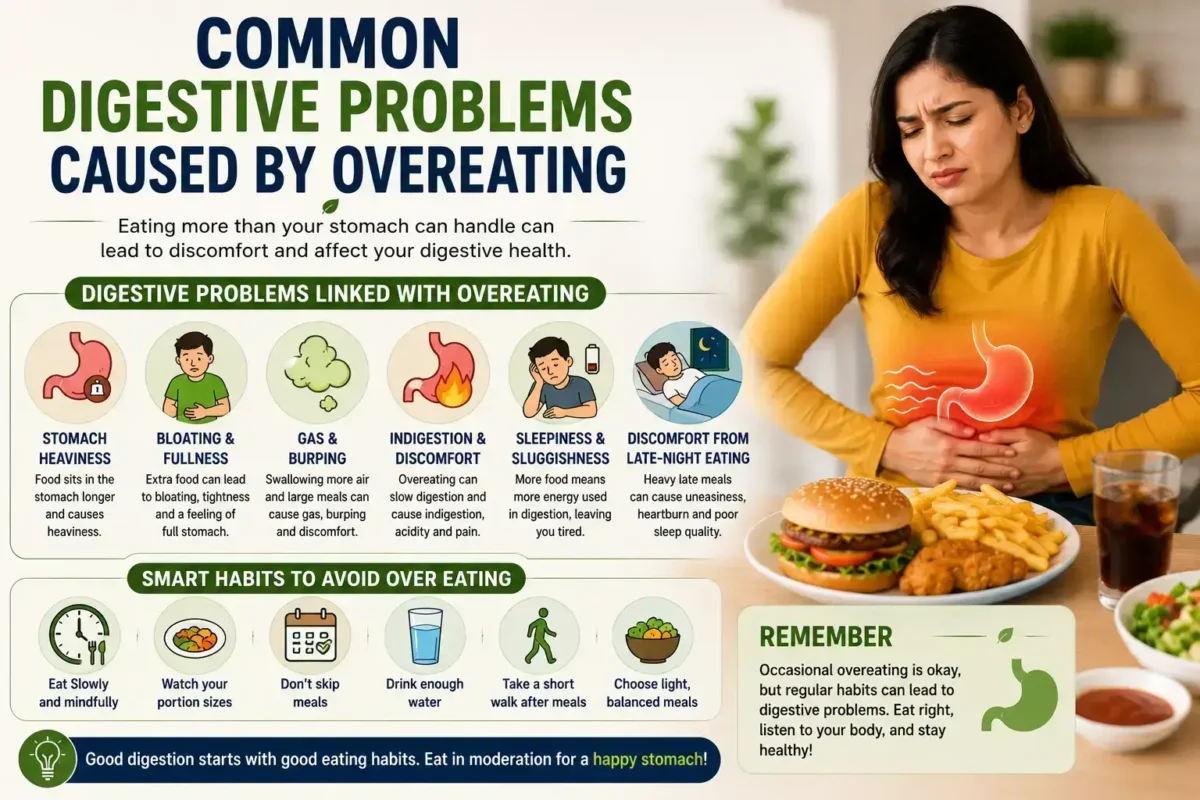
Overeating can sometimes leave people feeling uncomfortable after meals. Common digestive problems caused by overeating may include stomach heaviness, bloating, gas, indigestion, fullness, burping, and post-meal discomfort. Large meals can affect digestive comfort differently from person to person, especially when eating quickly, eating late, or consuming rich foods.
This article is part of our Complete Guide to Digestive Health.
Read the Complete Guide to Digestive Health
Why Overeating Can Affect Digestion
Most people have experienced overeating at some point.
A festival meal, restaurant dinner, family gathering, buffet, or favourite comfort food can easily lead to eating more than planned.
The result? Instead of feeling
satisfied, some people notice
- A heavy stomach
- Sluggishness
- Tightness or fullness
- Bloating
- Reduced comfort after eating
This happens because the digestive system suddenly has a larger amount of food to process.
What Is Considered Overeating?
Overeating does not always mean eating extremely large quantities.
Sometimes it simply means eating beyond comfortable fullness.
For example:
- Eating quickly and missing fullness signals
- Taking repeated servings after already feeling satisfied
- Eating heavy late-night meals
- Stress eating or emotional eating
- Eating large portions out of habit
Small patterns repeated regularly may influence digestive comfort.
1. Stomach Heaviness After Meals
One of the most common digestive complaints linked with overeating is feeling unusually heavy after eating.
People often describe it as:
- Food sitting in my stomach
- Too full to move comfortably
- Heavy after every large meal
Large meals may require more digestive effort, which can leave some individuals feeling sluggish afterward.
2. Bloating and Abdominal Fullness
Overeating may contribute to bloating in some people.
When large amounts of food are consumed quickly, individuals may notice:
- Tightness around the stomach area
- Fullness lasting longer than expected
- Increased abdominal pressure
- Reduced comfort after meals
Eating speed, meal size, and food choices can all influence this experience.
3. Gas and Burping
Large meals are sometimes accompanied by:
- Burping
- Gas formation
- Air swallowing during fast eating
- Feelings of trapped fullness
This may be more noticeable after rich meals, carbonated drinks, or eating in a hurry.
4. Indigestion and Post-Meal Discomfort
Indigestion is another digestive concern some people notice after overeating.
Possible experiences may include:
- Uneasiness after meals
- Fullness that lasts too long
- Mild stomach
- Feeling uncomfortable after heavy foods
Many people become familiar with this feeling after oversized dinners or celebration meals.
5. Sleepiness and Sluggish Feeling After Eating
Not every effect of overeating feels strictly digestive.
Some people notice:
- Reduced energy
- Sleepiness after meals
- Less motivation for movement
- Feeling slow or inactive
Heavy meals can sometimes leave people wanting to lie down immediately afterward.
6. Increased Discomfort From Late-Night Overeating
Large late dinners can feel especially uncomfortable for some individuals.
People may report:
- Stomach heaviness before sleep
- Feeling overly full at bedtime
- Post-meal discomfort while lying down
- Reduced comfort the next morning
Meal timing and meal size can both influence post-meal experience.
Everyday Habits That May Help Reduce Overeating
Small practical habits can sometimes make a difference.
Eat More Slowly
Slower eating may make it easier to notice fullness signals.
Watch Portion Sizes
Moderate portions often feel more comfortable than oversized meals.
Avoid Long Gaps Between Meals
Skipping meals can sometimes lead to overeating later.
Stay Hydrated
Healthy hydration habits support overall wellness and digestive routines.
Eat With Awareness
Paying attention during meals may help reduce distracted eating.
Signs You May Be Overeating Regularly
You may want to observe your habits if you often experience:
- Heavy stomach after meals
- Frequent bloating
- Excessive fullness
- Feeling uncomfortable after eating
- Repeated post-meal sluggishness
Tracking meal patterns for a few days may reveal useful clues.
Frequently Asked Questions – Common Digestive Problems Caused by Overeating
Q1. Can overeating cause bloating?
Yes. Some individuals notice bloating, fullness, or stomach tightness after eating very large meals.
Q2. Why do I feel extremely heavy after eating too much?
Large meals may leave some people feeling overly full or sluggish because the digestive system is processing a greater amount of food.
Q3. Does eating fast make overeating worse?
Fast eating may make it harder for some people to recognize comfortable fullness levels.
Q4. Can overeating cause indigestion?
Some people report indigestion or digestive discomfort after oversized meals.
Q5. How can I avoid digestive discomfort from overeating?
Eating slowly, watching portions, staying hydrated, and maintaining regular meal habits may support better digestive comfort.
Conclusion
Common digestive problems caused by overeating “may include stomach heaviness, bloating, gas, indigestion, and post-meal discomfort. While occasional overeating can happen from time to time, paying attention to eating speed, portion sizes, meal timing, and daily habits may help support digestive comfort and overall wellness.
Explore our Digestive Care Products
Related Topic:
- Complete Guide to Digestive Health
- What Causes Gas and Bloating After Meals?
- Difference Between Gas and Acidity
- Common Causes of Indigestion and Stomach Discomfort
- Why Do I Feel Bloated After Eating
- Foods That Commonly Cause Gas and Bloating
- How Eating Habits Affect Digestion
- Can Drinking More Water Help Digestion?
- Does Walking After Meals Help Digestion?